.png)
Published August 26, 2026
5 Mistakes to Avoid When Buying and Selling a Home at the Same Time

Buying and selling a home at the same time can feel overwhelming.
Do you sell your current home first and risk not having somewhere to move? Do you buy your next home first and risk carrying two mortgages? Or do you try to perfectly coordinate both transactions?
For homeowners in Evansville, Newburgh, and throughout Southwest Indiana, there isn't one answer that's right for everyone.
The key is having a plan before you start.
Over the years, we've helped thousands of families navigate real estate transactions throughout Southwest Indiana. Here are five of the biggest mistakes I see homeowners make when trying to buy and sell at the same time and how you can avoid them.
Click here to watch the full video explaining the 5 mistakes.

Mistake #1: Shopping Before Knowing What Your Current Home Is Worth
It's easy to start browsing homes online and thinking about where you'd like to move next.
But before you seriously start shopping, you need to understand what your current home is worth.
Why?
Because the value of your current home helps determine:
- How much equity you have
- Approximately how much money you could walk away with after selling
- How much you may have available for a down payment
- What price range makes sense for your next home
For example, suppose you're planning on having $150,000 in equity available after selling your home. If your home's actual market value is lower than you expected, that can completely change the numbers for your next purchase.
That's why one of the first things we recommend is getting an accurate idea of your home's value.
Online home value estimates can be a useful starting point, but they don't always account for your home's condition, improvements, specific location, floor plan, or current competition.
Before making a major financial decision, we recommend having a real estate professional complete a comparative market analysis and walk through your property.
Mistake #2: Finding Your Next Home Before Getting Your Current Home Ready to Sell
This is one of the most avoidable mistakes.
A homeowner starts looking at houses without doing anything to prepare their current home.
Then they find it:
The house they want to buy.
We negotiate an offer, potentially with a home-sale contingency, and suddenly the clock is ticking.
But their current house isn't ready.
They still need to declutter. There are repairs to make. The photographer needs to be scheduled. Photos need to be edited. Marketing needs to be prepared.
Suddenly, we've lost several days—or even a couple of weeks.
That's valuable time.
Prepare Before You Find the House
A better strategy is to get your current home ready before you need to put it on the market.
Depending on your situation, we can:
- Walk through the property
- Determine an estimated market value
- Identify repairs or improvements worth considering
- Develop a pricing and marketing strategy
- Complete photography
- Prepare the listing
Then you can start looking for your next home.
If you find the right property and need to quickly list yours, we're ready to go.
Instead of spending the next week getting prepared, we can potentially put your home on the market immediately.
Mistake #3: Assuming You Have to Sell Before You Buy
A lot of homeowners tell me some version of:
"I'd love to move, but I need the money from this house to buy the next one."
That doesn't necessarily mean you have to sell first.
There are multiple ways a homeowner may be able to structure a move.
One option is making an offer on your next home that's contingent upon selling your current property.
There may also be financing strategies that allow qualified homeowners to access equity or purchase their next property before their current home is sold.
The appropriate strategy depends on your finances, available equity, mortgage qualifications, current property, and the home you're trying to purchase.
I've covered these options in more detail in my other resources about using your home equity to buy your next house and how contingent offers work when buying and selling at the same time.
The important takeaway is simple:
Don't assume you can't buy until you've sold. Find out what your options are first.
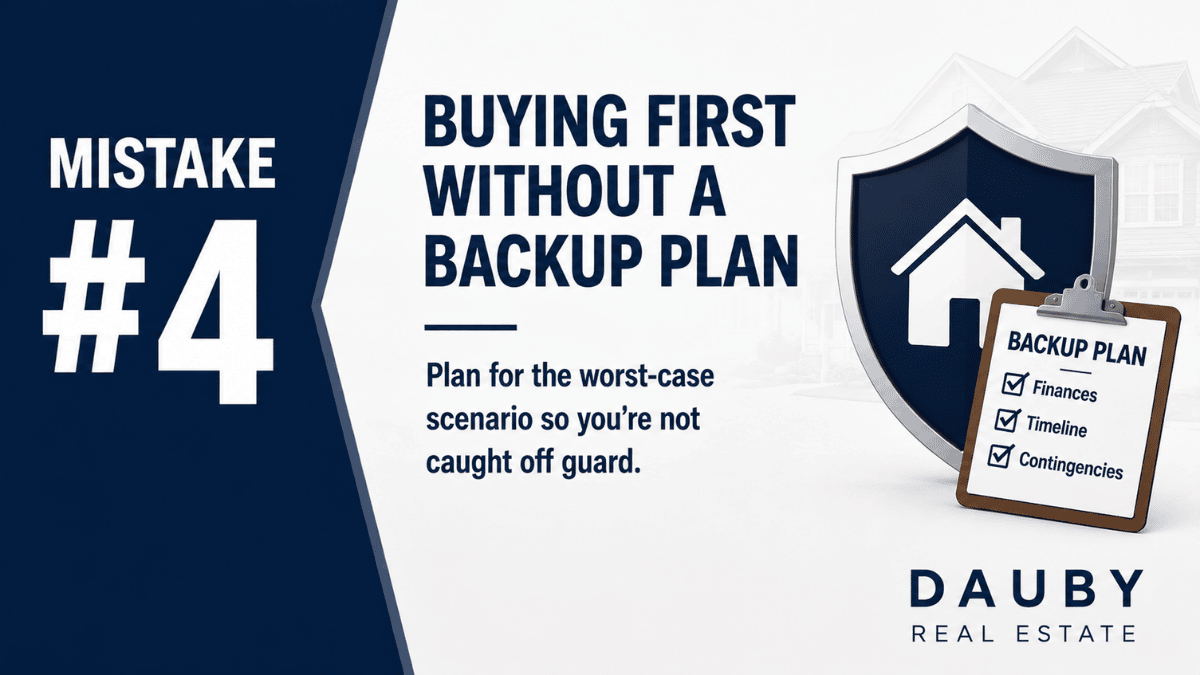
Mistake #4: Buying First Without Planning for the Worst-Case Scenario
Just because you can buy before selling doesn't automatically mean you should.
Before one of our clients buys first, I want to talk about the worst-case scenario.
Let's say you purchase your next home and expect your existing home to sell quickly.
But it doesn't.
What happens if it takes 30 days?
What about 60 days?
What about 90 days?
Could you comfortably carry:
Two mortgage payments? Two sets of utilities? Property taxes? Insurance? Maintenance?
If the answer is no, we need to know that before you purchase the next property.
You don't want to get into a position where financial pressure forces you to accept an offer on your current home that you otherwise wouldn't accept.
Plan for More Than the Best-Case Scenario
When we help someone develop a buy-and-sell strategy, we're not only looking at what we expect to happen.
We want to understand:
Best case: What happens if everything goes perfectly?
Expected case: What do we realistically believe will happen?
Worst case: What happens if the house takes considerably longer to sell?
A good plan should account for all three.
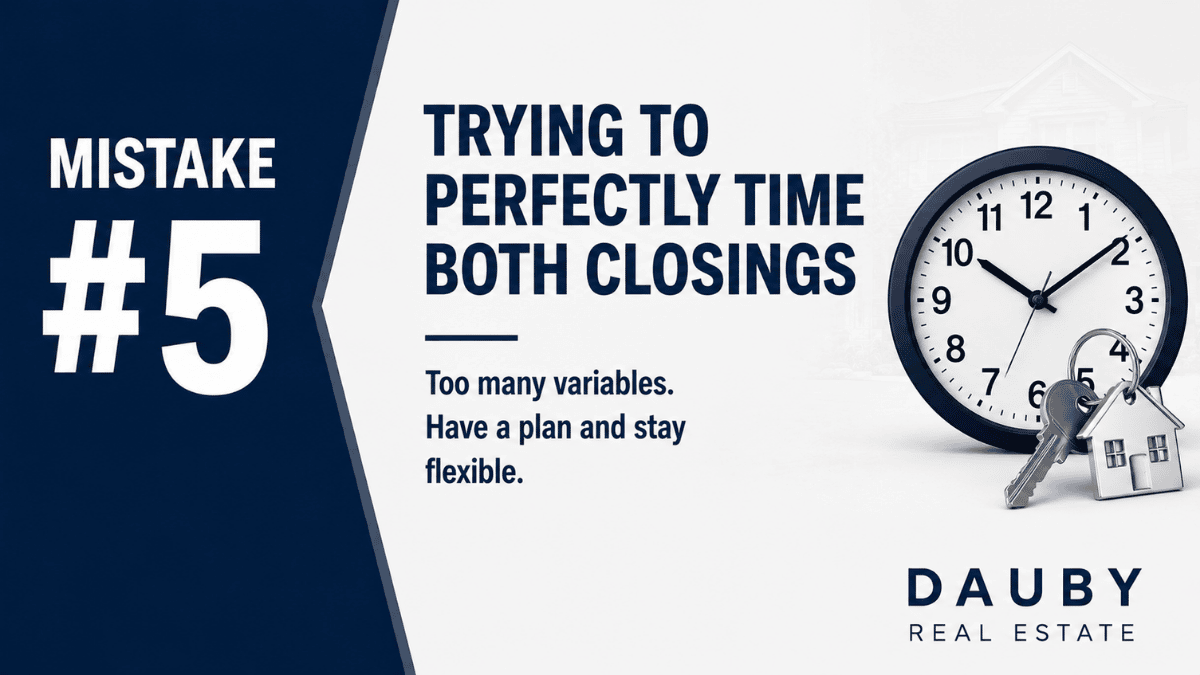
Mistake #5: Trying to Perfectly Time Both Closings
On paper, this sounds great:
10:00 a.m. — Close on the house you're selling.
1:00 p.m. — Close on the house you're buying.
That afternoon — Move directly from one house into the other.
Could it happen?
Absolutely.
Would I build your entire plan around everything happening perfectly?
No.
There are simply too many variables in a real estate transaction.
A buyer could have a financing delay. An underwriter could request another document. An inspection repair could take longer than expected. A title issue could arise. One closing could be delayed.
And if your purchase depends on your sale closing first, one delay can potentially affect both transactions.
That's why flexibility is important.
Depending on the circumstances, there may be options involving possession after closing, contingencies, financing strategies, or simply building additional time into the plan.
The goal isn't necessarily to make two closings happen within an hour of one another.
The goal is to get you from your current home into your next home with as little unnecessary risk and stress as possible.
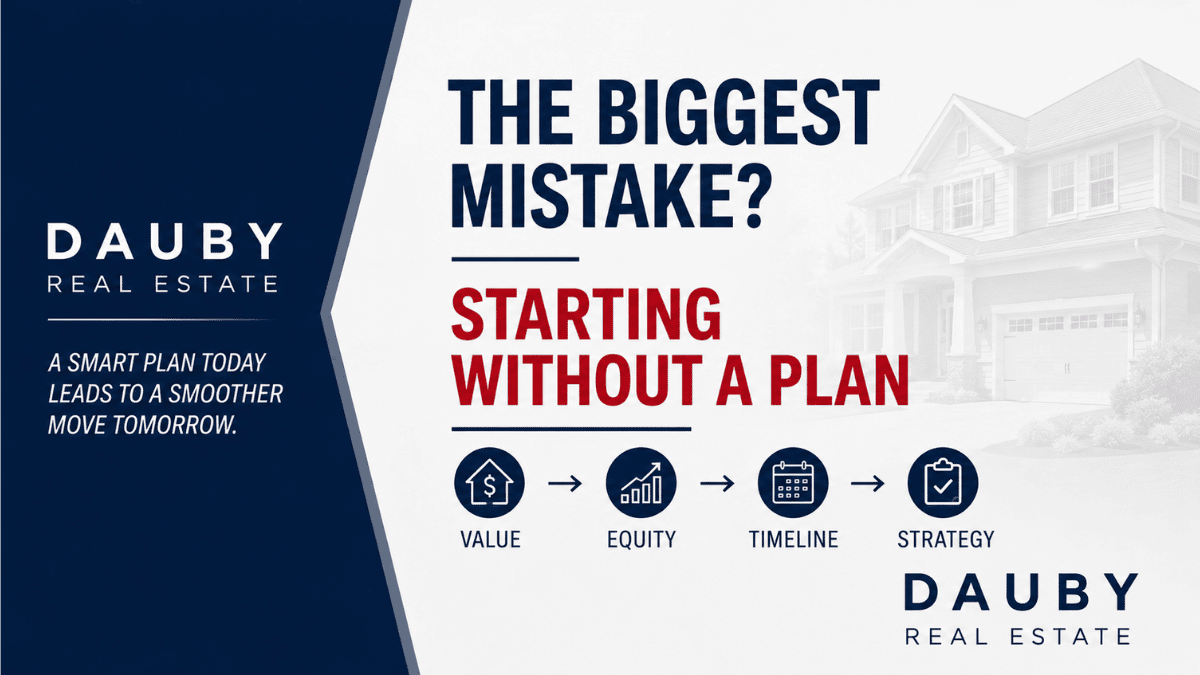
The Biggest Mistake: Starting Without a Plan
Ultimately, all five mistakes come back to one issue:
Starting the process before developing a strategy.
Before you begin seriously shopping for your next home, I believe you should understand four things:
1. Value
What is your current home realistically worth in today's market?
2. Equity
After paying off your mortgage and accounting for the costs associated with selling, approximately how much money will you have available?
3. Timeline
How quickly is your current home likely to sell, and what timeline are you working with for the next purchase?
4. Strategy
Should you sell first? Buy first? Use a contingency? Explore a financing option that could allow you to buy before selling?
Once we understand those four things, we can build the rest of the plan around them.
Should You Sell First or Buy First?
This is one of the most common questions we get from homeowners considering a move.
And the answer really is:
It depends.
For some homeowners, selling first provides financial certainty and eliminates the risk of carrying two homes.
For others, buying first eliminates the stress of finding temporary housing or moving twice.
And for some, a contingent offer or another buy-before-you-sell strategy provides a good middle ground.
Your finances matter. Your home's marketability matters. The type of home you're trying to purchase matters. Your tolerance for financial risk matters.
That's why we don't believe in giving every homeowner the same answer.
Buying and Selling in Evansville, Newburgh or Southwest Indiana?
The local market matters, too.
A home in one price range or neighborhood may sell very differently than a property just a few miles away. The amount of competition you face when buying can also vary based on location, price range, condition, and property type.
That's why your plan should consider both sides of the move:
How difficult will it be to sell what you currently own?
and
How difficult will it be to buy what you want next?
If you're thinking about moving up, downsizing, or simply making a move in Evansville, Newburgh, Princeton, Jasper, Mount Vernon, Santa Claus, or elsewhere in Southwest Indiana, we'd be happy to help you develop that plan.
We can start with a complimentary walkthrough of your current home, discuss its potential market value, estimate how quickly it could sell, and talk through the different ways you could structure your move.
There is no obligation to list your home or purchase a property with us.
The goal is simply to make sure you understand your options before you make a decision.
Call or text Trae Dauby at 812-777-4611 or visit DaubyRealEstate.com to get started.
Frequently Asked Questions About Buying and Selling at the Same Time
Should I sell my house before buying another one?
Not necessarily. Selling first can provide more financial certainty, but buying first may make the physical move easier. Some homeowners may also be able to use a home-sale contingency or financing strategy that allows them to purchase before selling. The right choice depends on your finances, equity, current home, and the property you're trying to buy.
Can I make an offer on a house before selling mine?
Yes. Depending on the circumstances, you may be able to make an offer contingent upon selling your current home. How attractive that offer is to the seller can depend on the property, competition from other buyers, and the specific terms of your offer.
Can I use my current home's equity to buy another house?
There may be financing options available to qualified homeowners that provide access to existing equity before their current home sells. Eligibility, costs, loan terms, and risks vary, so you should discuss the available options with a qualified mortgage professional.
How early should I prepare my house to sell?
Ideally, you should begin preparing before you find your next home. That gives you time to address repairs, declutter, prepare marketing, and potentially complete photography so you're ready to list quickly if you find a home you want to purchase.
Can I buy and sell a house on the same day?
Yes, it's possible to coordinate the sale of one property and purchase of another on the same day. However, because delays can occur in either transaction, it's important to have a backup plan rather than relying on both transactions happening perfectly.
What's the first step if I want to move but need to sell my current home?
A good starting point is determining your current home's approximate market value, your estimated equity, and how quickly the property is likely to sell. From there, you can evaluate whether selling first, buying first, or using another strategy makes the most sense.
About Trae Dauby
Trae Dauby is the founder of Dauby Real Estate and has helped homeowners throughout Southwest Indiana navigate the home buying and selling process. Dauby Real Estate has served more than 3,500 families throughout the region.
Trae regularly shares real estate education and local market information for homeowners in Evansville, Newburgh, Warrick County, and communities throughout Southwest Indiana.
If you're considering a move and aren't sure where to start, call or text Trae at 812-777-4611 or visit DaubyRealEstate.com.
or another way