.png)
Published September 9, 2026
Should You Give Up Your 3% Mortgage Rate to Move?


If you bought or refinanced a home when mortgage rates were historically low, you may be sitting on something that's pretty hard to give up: a 3% mortgage rate.
And if you've thought about moving, you've probably asked yourself:
Why would I give up my 3% interest rate for a higher rate and potentially a much higher mortgage payment?
It's a question we're hearing from homeowners throughout Evansville, Newburgh and Southwest Indiana, especially people who bought or refinanced when mortgage rates were extremely low.
Sometimes, the answer is simple: You shouldn't.
If your current home still works for you and your family, giving up a low mortgage rate just for the sake of moving may not make financial sense.
But there's another side to the conversation.
Your interest rate is not your house.
You don't live inside an interest rate. You live inside a home. And sometimes that home no longer fits your life.
And sometimes that home no longer fits your life.
Before you allow a low mortgage rate to determine whether you stay or move, there are a few things I think every homeowner should consider.
Click here to watch the full video.
A 3% Mortgage Rate Has Real Value
Let's start by acknowledging the obvious: a low mortgage rate is valuable.
Your interest rate plays a significant role in determining your monthly mortgage payment. Moving from a 3% mortgage to a higher rate could mean paying substantially more each month, depending on the price of your next home, your down payment and other factors.
That's why I wouldn't recommend moving simply because you'd like something different.
If you like your home, it still meets your needs and staying there works well for your family and finances, keeping that low mortgage may be a great decision.
The problem comes when the mortgage rate becomes the only reason you're staying.

Your Mortgage Rate Isn't Your Home
This is the distinction I think homeowners sometimes miss.
Imagine you bought your home several years ago and locked in an incredible mortgage rate.
Since then, you've had two more children.
Suddenly, the house that worked perfectly five years ago feels like you're busting at the seams.
You need another bedroom. You need more storage. You'd love another bathroom. Maybe you simply need more room for your family to live comfortably.
Yes, moving could mean a higher mortgage payment.
But what would that additional expense give you?
More space?
Less stress?
A better layout for your family?
That's part of the calculation too.
The opposite can also happen.
Maybe your kids have moved out and you're now maintaining a large house you no longer need. The yard is too much work, you're paying to heat and cool rooms you rarely use, or you're simply ready for something smaller.
You might give up your low interest rate by downsizing.
But if the move gives you a home that better fits this stage of your life, the interest rate shouldn't necessarily make the decision for you.
A great mortgage rate doesn't automatically mean you're still living in the right house.
Compare the Monthly Payments, Not Just the Interest Rates
Instead of comparing:
3% vs. today's mortgage rate
I think there's a more useful comparison:
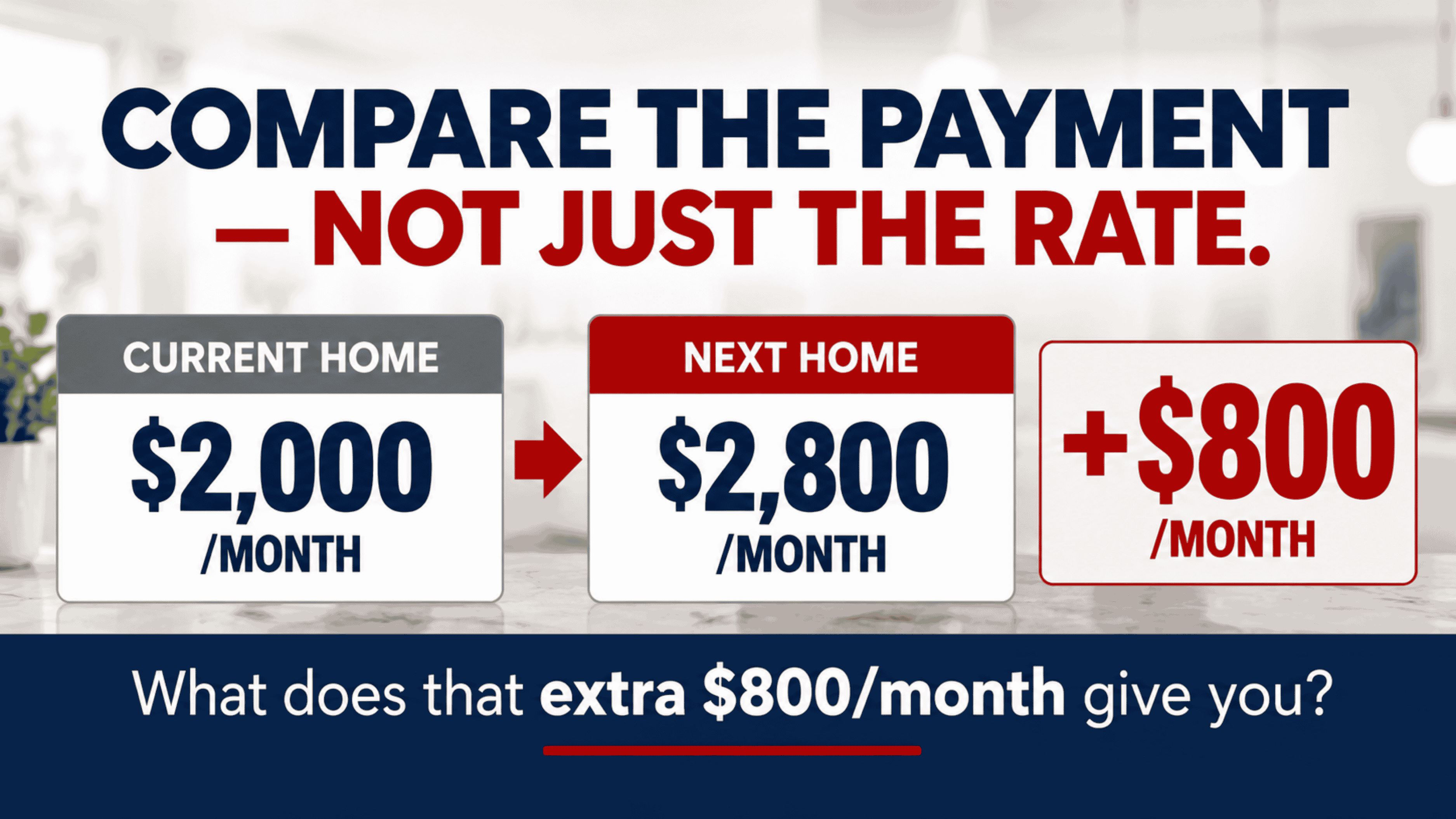
What am I paying each month now, and what would I pay each month in the home I actually need?
Let's use a simple example.
Suppose your current mortgage payment is:
$2,000 per month
You determine that the type of home your family needs would result in a payment of approximately:
$2,800 per month
Now you have a much more meaningful question:
Is the next home worth an additional $800 per month to us?
For one family, the answer might be an immediate no.
Their current home works fine, and they'd rather invest or save that $800 every month.
Great. Staying put may be the right decision.
Another family may desperately need more space. An additional $800 per month comfortably fits within their budget, and the new home would dramatically improve their family's day-to-day life.
For them, the answer may be yes.
That's a much better way to approach the decision than simply saying, "I'm never giving up my 3% rate."

Your Home Equity Could Change the Numbers
There's another important factor that homeowners sometimes overlook:
How much equity have you accumulated?
If you've owned your home for several years, you may have considerably more equity than you realize.
A simple way to estimate your gross equity is:
Current Home Value – Mortgage Payoff = Estimated Gross Equity
For example:
Home value: $400,000
Mortgage payoff: $200,000
Estimated gross equity: $200,000
Your actual proceeds from selling would be lower after accounting for selling expenses and other transaction costs, but this gives you a starting point.
Why does this matter?
Because that equity could potentially become the down payment on your next home.
The larger your down payment, the less you may need to borrow.
And that means the payment difference between your current home and your next home may not be as dramatic as you initially assumed.
That's why I recommend figuring out your equity before deciding that moving isn't financially possible.
Find Out What Your Current Home Is Worth
To calculate your equity, you first need a reasonable estimate of your home's value.
Online home value tools can be a good place to start. They'll give you a rough estimate based on available property and market data.
But remember that an automated valuation hasn't walked through your house. It doesn't necessarily know the condition of your property, the quality of your updates or all the other characteristics that could affect what a buyer might actually pay.
When you become serious about moving, that's when we recommend having a real estate professional walk through your home and prepare a more detailed market analysis.
At Dauby Real Estate, we're happy to help Southwest Indiana homeowners do exactly that.
Find out what your home is worth by clicking here.
Don't Base Your Move on Trying to Predict Mortgage Rates
Another thing I wouldn't recommend is saying:
"I'll just wait until next year when mortgage rates come down."
Maybe they will.
Maybe they won't.
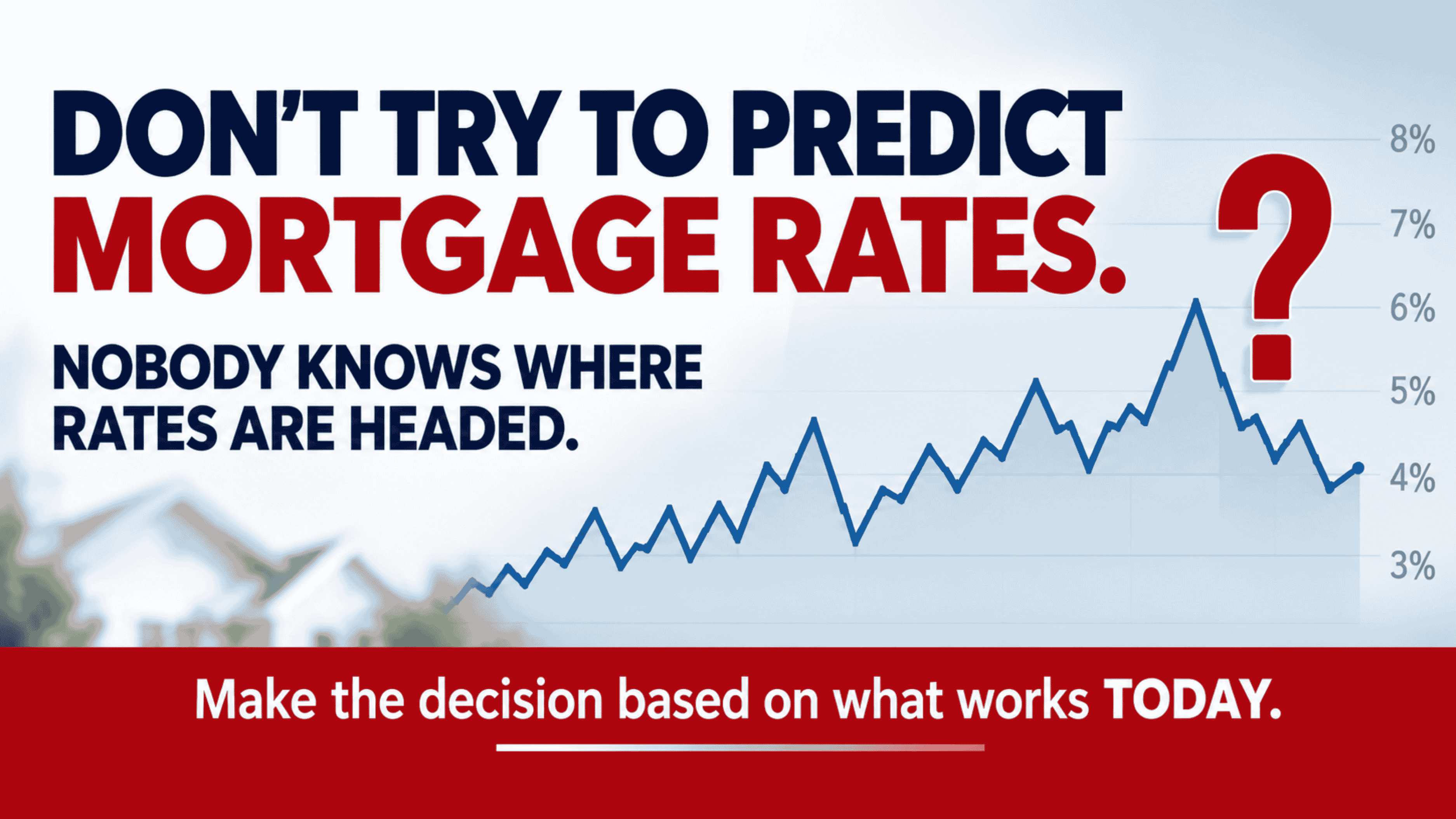
There are numerous economic factors that can influence mortgage rates, and predicting exactly where they'll be six months or a year from now is extremely difficult.
Instead of making a major life decision based on where you hope mortgage rates will be in the future, look at the numbers that are available to you today.
Ask:
- What is my home worth?
- How much equity do I have?
- What type of home would better fit my life?
- Approximately what would that home cost?
- What would my monthly payment look like?
- Can I comfortably afford that payment?
- What would moving actually improve for me or my family?
Once you know those answers, you can make a much more informed decision.
So, Should You Give Up Your 3% Mortgage Rate?
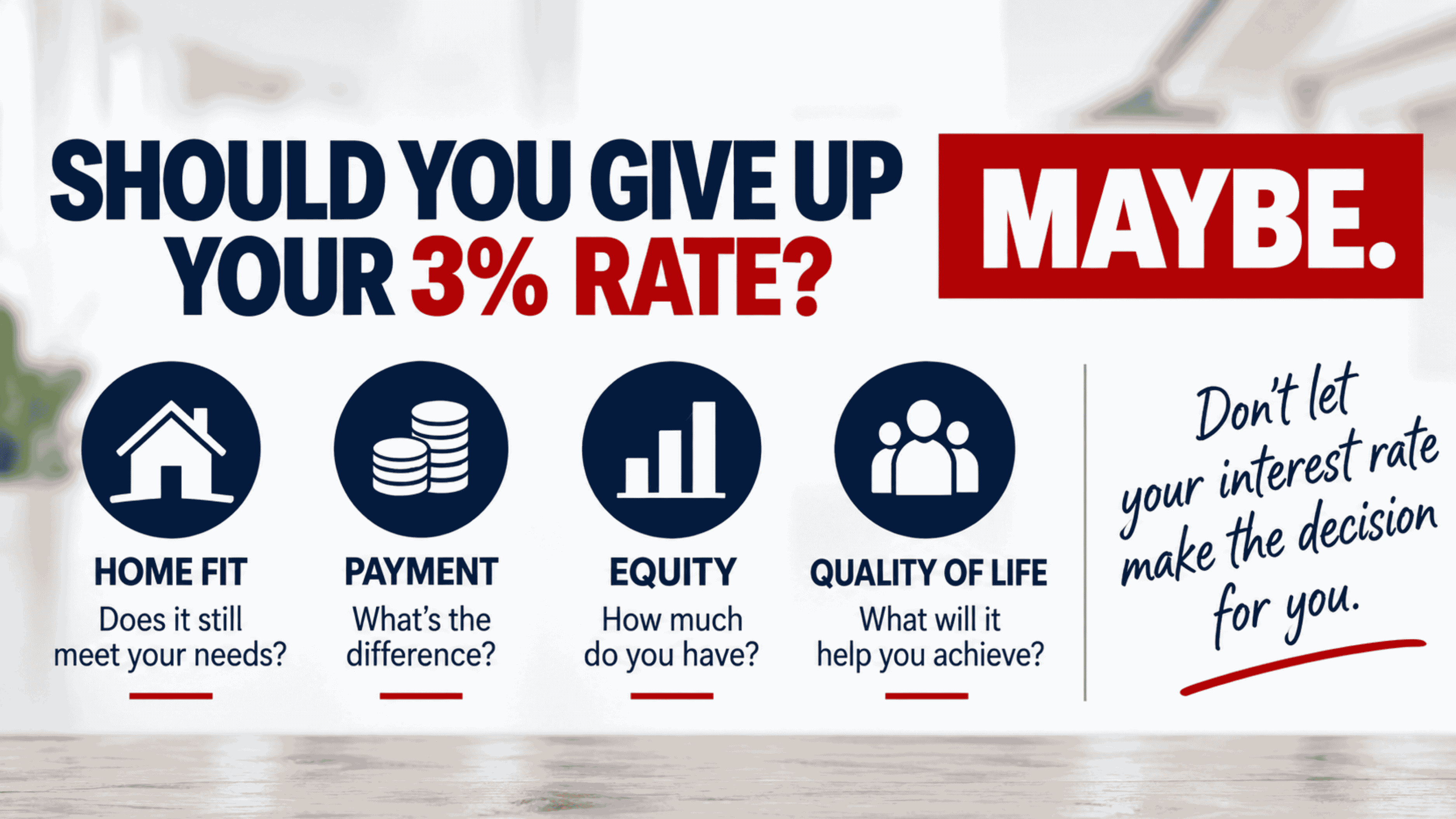
Maybe. Maybe not.
If your current home still fits your needs, you enjoy living there and moving would create unnecessary financial stress, keeping your low mortgage rate could make a lot of sense.
But don't allow a low interest rate to trap you in a home that no longer fits your life.
Instead, run the numbers.
Determine what your home may be worth. Calculate your approximate equity. Figure out what the right next home would cost. Estimate the new payment.
Then ask yourself whether what you'd gain from moving is worth the additional cost.
You may discover that moving makes absolutely no sense.
Or you may discover that the difference isn't nearly as significant as you expected.
Either answer is okay.
The goal isn't to convince yourself to move. The goal is to have enough information to make the right decision for your situation.
Thinking About Moving in Southwest Indiana?
If you own a home in Evansville, Newburgh, Santa Claus, Princeton, Boonville or elsewhere in Southwest Indiana and you're wondering whether giving up your low mortgage rate makes sense, we're happy to help you work through the numbers.
We can help you:
- Determine the approximate market value of your current home
- Estimate how much equity you may have
- Discuss what you're looking for in your next home
- Explore potential price ranges
- Estimate what the financial difference between staying and moving could look like
There's no obligation to sell your home.
Sometimes we'll work through everything and determine that staying exactly where you are is the better decision.
If you'd like to start the conversation, call or text Trae Dauby at 812-777-4611 or visit DaubyRealEstate.com.
Dauby Real Estate has helped more than 3,500 families throughout Southwest Indiana, and we'd be happy to help you determine whether your next move makes sense.
Frequently Asked Questions
Is it worth giving up a 3% mortgage rate to move?
It depends on your individual situation. If your current home still meets your needs, keeping a low mortgage rate can have significant financial value. If your home no longer fits your family or lifestyle, compare your current monthly housing cost with the estimated cost of your next home before deciding.
Should I wait for mortgage rates to fall before moving?
There's no guarantee mortgage rates will be lower at a particular point in the future. Rather than making your entire decision based on a rate prediction, consider whether moving makes sense based on your current finances, equity, housing needs and available options.
How does home equity help when buying my next house?
Equity from your current home may provide money that can be used toward the purchase of your next property. A larger down payment can reduce the amount you need to finance, potentially affecting your new monthly payment.
How do I calculate my home equity?
As a starting point, subtract your current mortgage payoff from your estimated home value. Remember that this represents gross equity and doesn't account for selling expenses or other transaction costs.
Should I downsize if I have a low mortgage rate?
Downsizing isn't automatically the right financial decision simply because you're buying a smaller or less expensive house. Compare your current housing expenses with the expected costs of the new home and consider what the move would improve in your life.
What should I do before deciding whether to move?
Start by determining your current home's approximate value, mortgage payoff and equity. Then identify what type of home you'd move into, estimate the new monthly payment and determine whether that payment comfortably fits your budget.
About Trae Dauby
Trae Dauby is the founder of Dauby Real Estate, serving homeowners throughout Evansville, Newburgh and Southwest Indiana. Dauby Real Estate has helped more than 3,500 families with their real estate needs.
Trae creates educational content to help homeowners better understand the financial and practical decisions involved in moving up, downsizing, buying and selling.
Call or text: 812-777-4611
Website: DaubyRealEstate.com