
Published October 26, 2026
Should You Sell Your House Before Buying Another? 5 Questions to Ask


If you're thinking about selling your current home and buying another one, one of the biggest decisions you'll face is whether to sell your house first or buy your next home before selling.
There's no single answer that works for everyone.
The right decision depends on how much money you have available, what type of home you're looking for, and how comfortable you are with the uncertainty of owning two properties or coordinating two transactions.
If you're planning to buy and sell a home in Evansville or elsewhere in Southern Indiana, here are five questions to help you decide which approach makes the most sense for your situation.
1. Do You Need the Money From Selling Your Current Home to Buy the Next One?
The first question to ask yourself is whether you need the proceeds from selling your current home to afford your next purchase.
In other words, do you have enough accessible money to buy another home without selling your current one first?
That includes having money available for your down payment, closing costs, inspections, moving expenses, and any repairs that may need to be completed on either property.
It's also important to understand the difference between having equity in your home and having money readily available.
You may have substantial equity in your current property, but that equity isn't necessarily accessible until you sell the home or arrange financing to borrow against it.
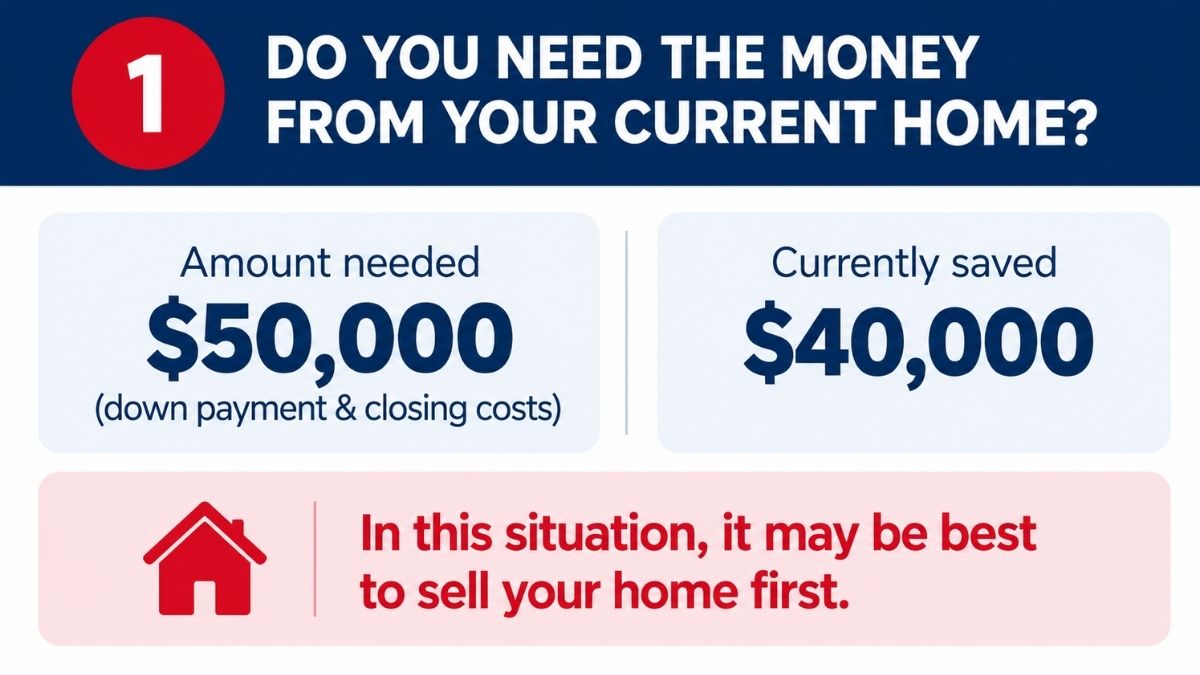
For example, let's say you need $50,000 for your next home's down payment and closing costs, but you only have $40,000 available in savings.
In that situation, selling your current home first may make more financial sense unless you have another reliable way to cover the difference.
If you have enough accessible funds to purchase your next home while maintaining your current property, buying first may be an option.
2. Can You Comfortably Afford Two Homes at Once?
Even if you have enough money for the down payment and closing costs, there's another important financial question.
Can you comfortably carry the expenses of two homes until your current property sells?
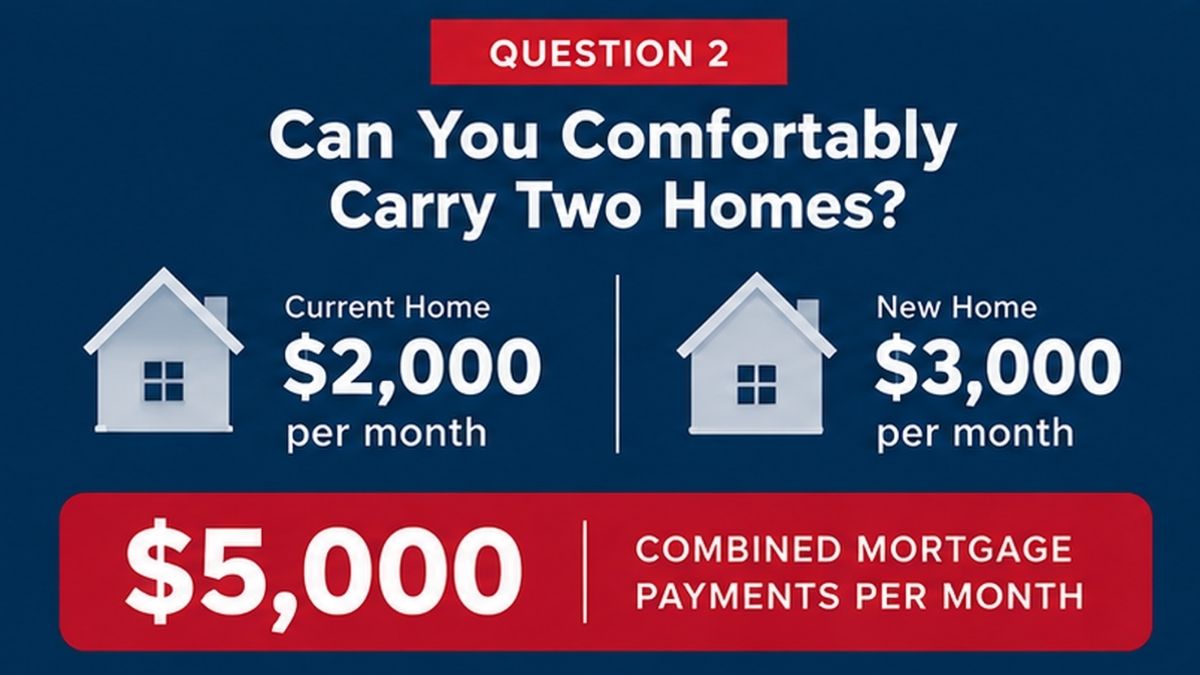
Let's say your existing mortgage payment is $2,000 per month, and your new mortgage payment would be $3,000 per month.
That means you would be paying $5,000 each month in combined mortgage payments.
If it takes three months to sell your current home, that's $15,000 in payments. If it takes six months, that's $30,000.
And those figures don't include additional expenses such as utilities, maintenance, insurance, or unexpected repairs.
Even if you expect your home to sell quickly, it's important to prepare for the possibility that it could take longer than anticipated.
If carrying two homes would put significant pressure on your finances, selling first may be the safer approach.
But if you have the financial flexibility to handle both properties comfortably, buying first could give you more control over your move.
3. How Difficult Will It Be to Find Your Next Home?
Once you've determined that buying first is financially possible, think about the type of home you're looking for.
Is your ideal home relatively easy to find, or are you searching for something unique?
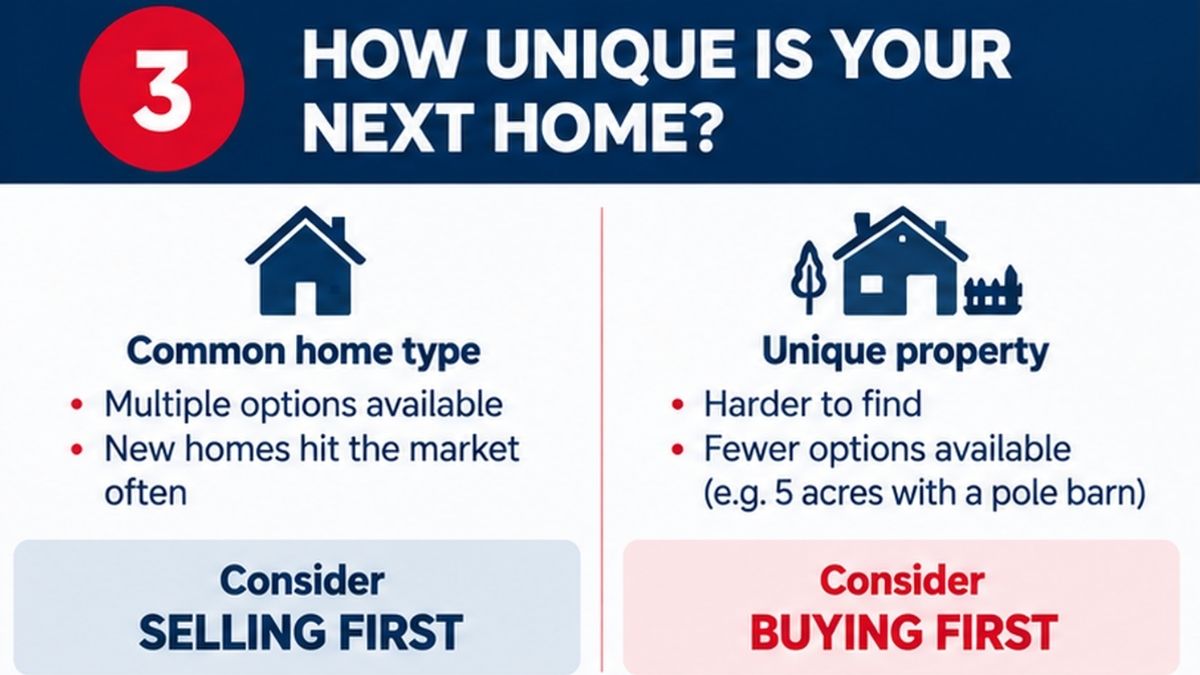
For example, if you're looking for a traditional three-bedroom home in an established neighborhood, there may be several properties available that fit your needs.
In that situation, you might feel comfortable selling your current home first, knowing there are likely to be other options when you're ready to purchase.
But what if you're searching for something more specific?
Maybe you want a home on five acres with a pole barn, a particular floor plan, or a property in a specific neighborhood.
Those homes may not come onto the market very often.
If you sell your current home before finding the right property, you could end up waiting longer than expected or feeling pressured to compromise.
When your next home has unique features that are difficult to replace, buying first may be worth considering if your finances allow it.
This is especially important when searching for properties with acreage or other uncommon features in Evansville, Newburgh, and surrounding Southern Indiana communities.
4. Are You Comfortable With the Possibility of Moving Twice?
One advantage of buying your next home before selling your current property is that you can typically move directly from one house to the other.
But if you sell first, there's a possibility you won't find or close on your next home before you need to move out.
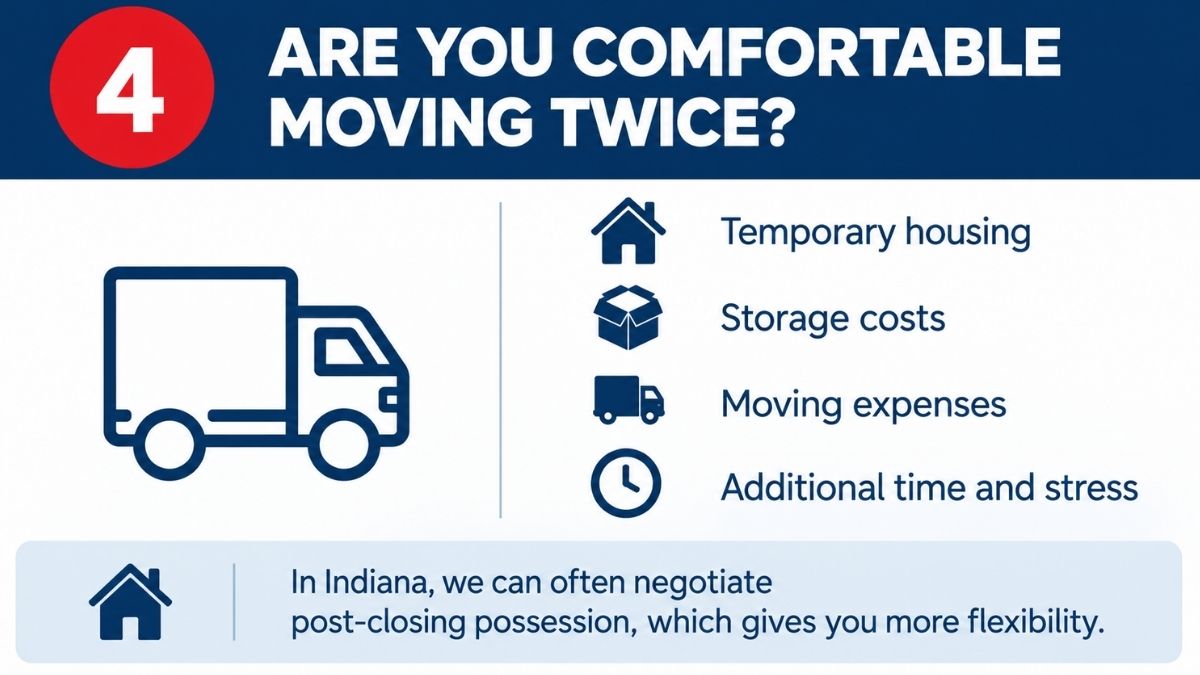
That could mean arranging temporary housing, renting a property, putting your belongings in storage, or paying movers twice.
Moving twice can create additional expenses and stress, especially if you have children, pets, or a household full of furniture.
Fortunately, there may be ways to create more flexibility.
In Indiana, buyers and sellers can sometimes negotiate a post-closing possession agreement, allowing the seller to remain in the home for an agreed period after closing.
For example, a seller might negotiate up to 30 days of additional possession, depending on the agreement and the buyer's circumstances.
This can provide extra time to complete the purchase of the next home and coordinate the move.
However, post-closing possession isn't guaranteed, and the terms need to be agreed upon by everyone involved.
Before deciding to sell first, consider whether you'd be comfortable with temporary housing or moving twice if the timing doesn't work out as planned.
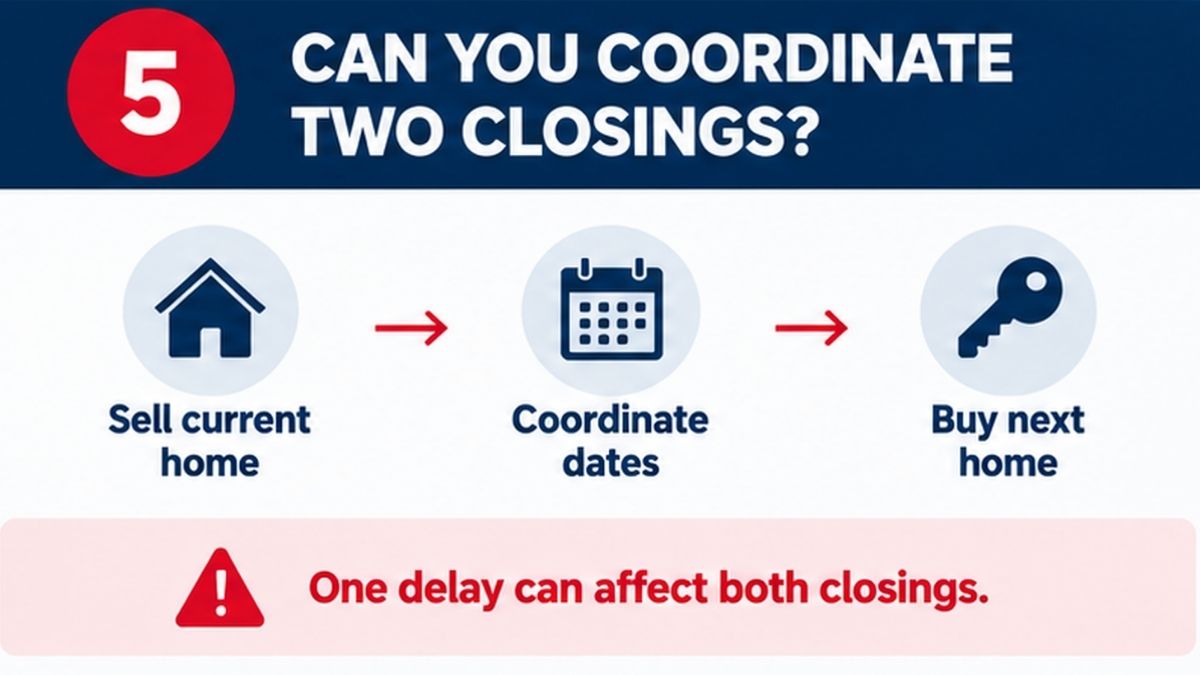
5. Can You Coordinate Both Closings and Handle Potential Delays?
If you plan to sell your current home and use the proceeds to purchase another property, timing becomes especially important.
You'll essentially have two transactions happening at the same time.
That means coordinating inspections, appraisals, financing, title work, repairs, and closing dates for both homes.
The challenge is that a delay in one transaction can affect the other.
For example, what happens if the buyer of your current home experiences a financing delay?
Or if an inspection repair isn't completed on time?
If the closing on your current home gets pushed back, you may not have the funds available to close on your next property as originally scheduled.
And while you can request an extension, the seller of the home you're purchasing isn't necessarily required to agree to it.
That's why having a backup plan is so important.
Depending on your situation, that might include negotiating additional possession time, adjusting closing dates, or discussing financing options with your lender.
Coordinating two closings can absolutely be done, but it requires careful planning and communication throughout both transactions.
So, Is It Better to Sell Your House First or Buy First?
The answer depends on your financial situation, the type of property you're looking for, and how much uncertainty you're comfortable managing.
Selling Your Home First May Make More Sense If:
- You need the proceeds from your current home to afford your next purchase.
- Carrying two mortgages would put pressure on your finances.
- You're looking for a relatively common type of home.
- You're comfortable arranging temporary housing if necessary.
- You want to know exactly how much money you'll have available before buying.
Buying Your Next Home First May Make More Sense If:
- You have enough accessible funds for the purchase and related expenses.
- You can comfortably afford both properties for several months.
- You're searching for a unique home that may be difficult to find again.
- You want to avoid the possibility of moving twice.
- You prefer having your next home secured before putting your current property on the market.
Neither approach is automatically better.
The goal is to choose a strategy that makes sense financially while giving you the best opportunity to find the right home.
Planning to Buy and Sell a Home in Southern Indiana?
If you're thinking about making a move in the next six to twelve months, it's a good idea to start planning before you find your next home.
One of the first steps is understanding what your current home could sell for and how much money you'd actually walk away with after selling expenses and your mortgage payoff.
From there, you can determine a realistic budget for your next property and evaluate whether selling first or buying first makes more sense.
Whether you're moving within Evansville, relocating to Newburgh, or looking for a property elsewhere in Southwest Indiana, your situation will depend on your finances, your goals, and the specific homes involved.
If you're considering buying and selling around the same time, I'd be happy to walk through your options, prepare a market analysis of your current home, and help you develop a plan for your next move.
Thinking about selling? Click here to find out what your home could be worth.
Looking to buy a home in Southern Indiana? Click here to start your home search.
About Trae Dauby
Trae Dauby is the founder of Dauby Real Estate, serving buyers and sellers throughout Evansville, Jasper, Boonville, and Southern Indiana. Dauby Real Estate has helped more than 3,500 families with their real estate needs.
Trae creates educational real estate content to help homeowners better understand the financial and practical decisions involved in buying and selling.
Call or text: (812) 777-4611
Website: DaubyRealEstate.com