
Published October 19, 2026
How Much Is My Home Worth? Why Zillow Estimates Aren't Always Accurate

If you've ever looked up your home's value on Zillow, you may have wondered just how accurate that number really is.
Online home value estimators can be a great starting point, but the number you see online isn't necessarily what your home would sell for in today's market.
And depending on your home's value, even a small percentage difference can mean tens of thousands of dollars.
If you're thinking about selling your home in Evansville or elsewhere in Southern Indiana, it's important to understand how home values are determined and what factors can affect your property's selling price.
Here's what you need to know before relying on an online estimate.
1. How Accurate Is Zillow's Home Value Estimate?
Zillow's Zestimate can give homeowners a general idea of what their property might be worth, but it isn't an appraisal or a guarantee of what a buyer will pay.
The accuracy of an online estimate can vary depending on the home, available property data, and recent sales in the area.
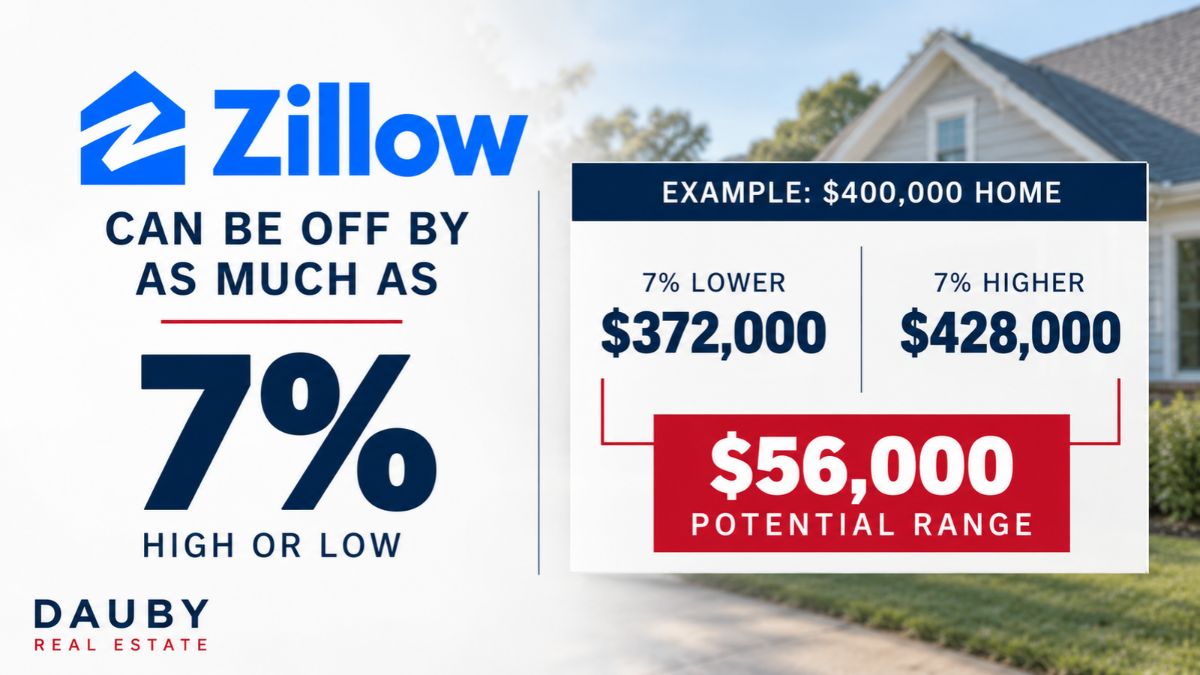
For example, a 7% difference on a $400,000 home is $28,000.
That means an estimate that's 7% too high or too low could create a $56,000 range between those two possible values.
And for some properties, the difference between an online estimate and the actual selling price can be even greater.
That's why online home value tools should be treated as a starting point, not the final answer.
2. Look at Comparable Homes That Have Recently Sold
One of the best ways to estimate your home's value is by looking at comparable properties, often called "comps."
These are homes that have recently sold and share important characteristics with your property.
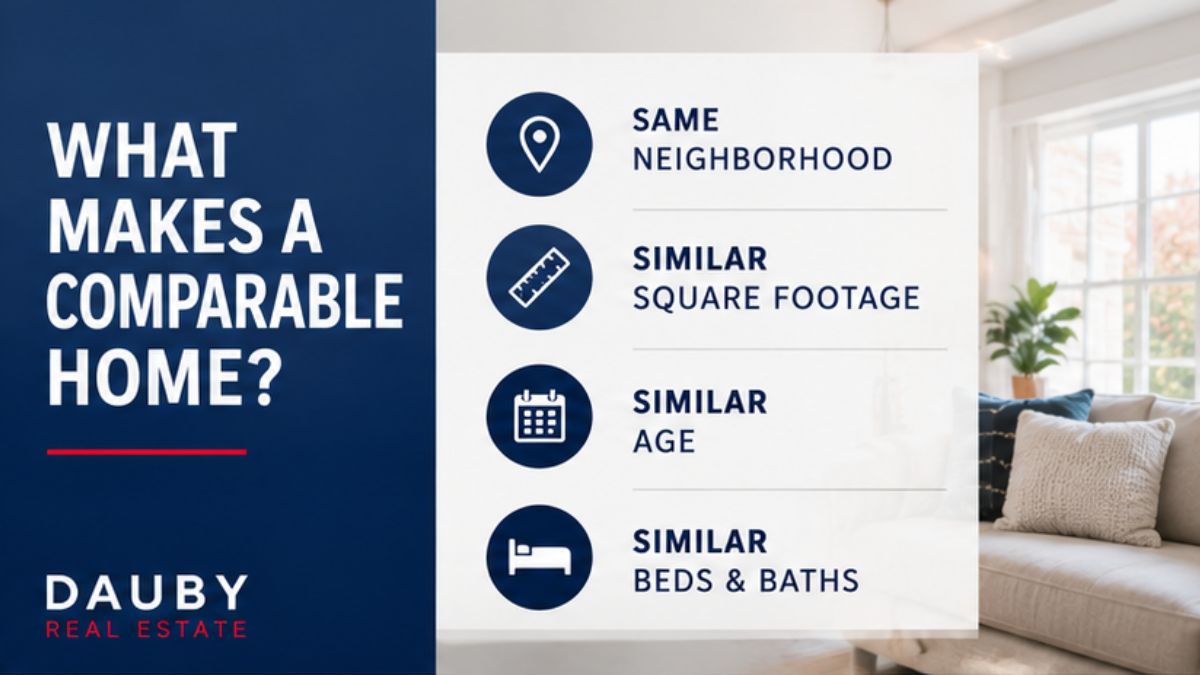
Ideally, you want to find homes that are:
- Located in the same neighborhood or a similar nearby area.
- Close to your home's square footage.
- Similar in age and construction.
- Comparable in the number of bedrooms and bathrooms.
- Similar in condition, lot size, and features.
For example, if you own a 1,500-square-foot home with three bedrooms and two bathrooms, you might start by looking for recently sold homes in your neighborhood that are approximately 1,300–1,700 square feet with similar layouts.
You wouldn't want to compare your property directly to a 3,000-square-foot home just because it's located on the same street.
Location is especially important when determining home value.
A property in Evansville may have a different market value than a similar home in Newburgh or another Southern Indiana community. Even neighborhoods within the same city can have different demand, amenities, and buyer preferences.
The closer the comparable properties are to your home in location and features, the more useful they may be in estimating its value.
3. Home Improvements Don't Always Increase Value Dollar for Dollar
Another common misconception is that every dollar spent on renovations increases a home's value by the same amount.
Unfortunately, that's not always how the real estate market works.
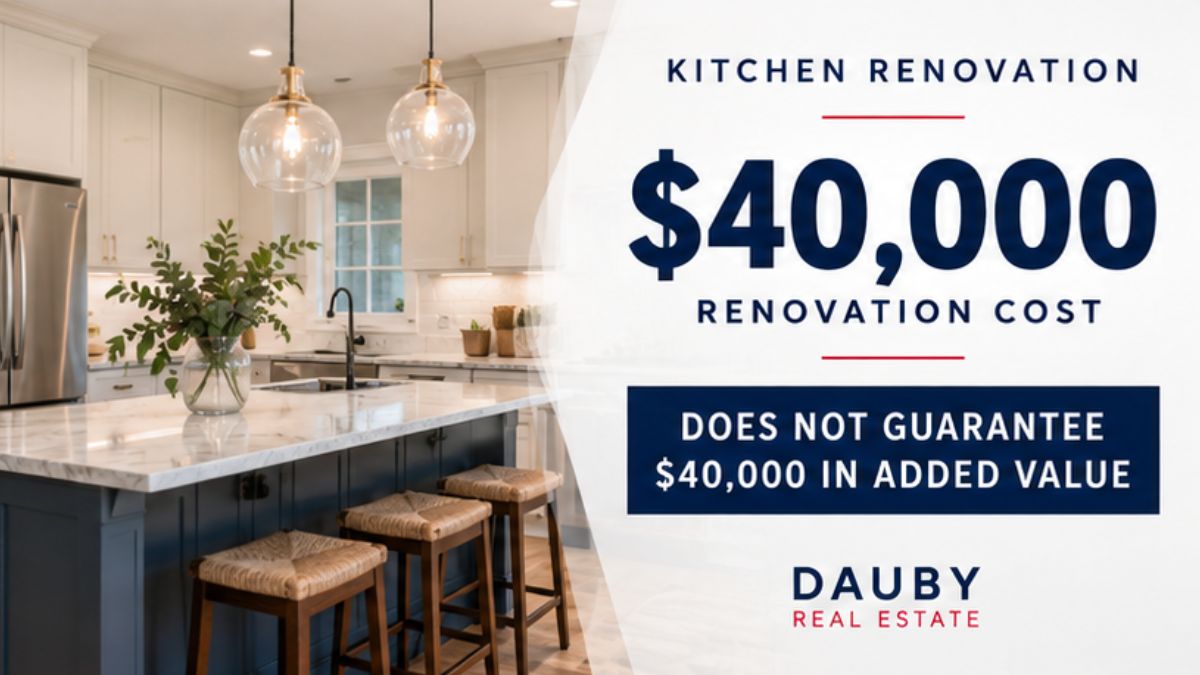
Let's say you recently spent $40,000 updating your kitchen.
Your home may now be more appealing to buyers than a similar property with an outdated kitchen, but that doesn't automatically mean your home is worth $40,000 more.
The same applies to major expenses such as replacing a roof or heating and cooling system.
Buyers generally expect those systems to be functional and properly maintained. Replacing them can make a home more appealing and reduce concerns about future repairs, but it doesn't necessarily result in an equal increase in resale value.
What About Swimming Pools?
Pools are another example of an improvement that can affect buyers differently.
Some buyers may love having a pool and be willing to pay more for a home with one.
Others may see the maintenance, insurance, and ongoing expenses as disadvantages.
An improvement's value depends partly on what buyers in your particular market are willing to pay for it.
That's why it's important to compare your home with similar properties rather than simply adding up everything you've spent on renovations.
4. Compare Your Home to What's Currently for Sale
Recently sold homes are important because they show what buyers have actually paid.
But you should also look at homes currently listed for sale in your area.
These properties represent your competition if you decide to sell.
Pay attention to their asking prices, condition, features, and how long they've been on the market.
For example, imagine a home similar to yours is listed for $400,000.
At first glance, you might assume your property is worth around the same amount.
But what if that home has been listed for more than 200 days?
That could indicate the property is overpriced, needs improvements, or has another issue affecting buyer interest.
Just because a homeowner is asking a certain price doesn't mean buyers are willing to pay it.
Also, look for properties that have had multiple price reductions. Those changes can provide insight into how buyers are responding to current asking prices.
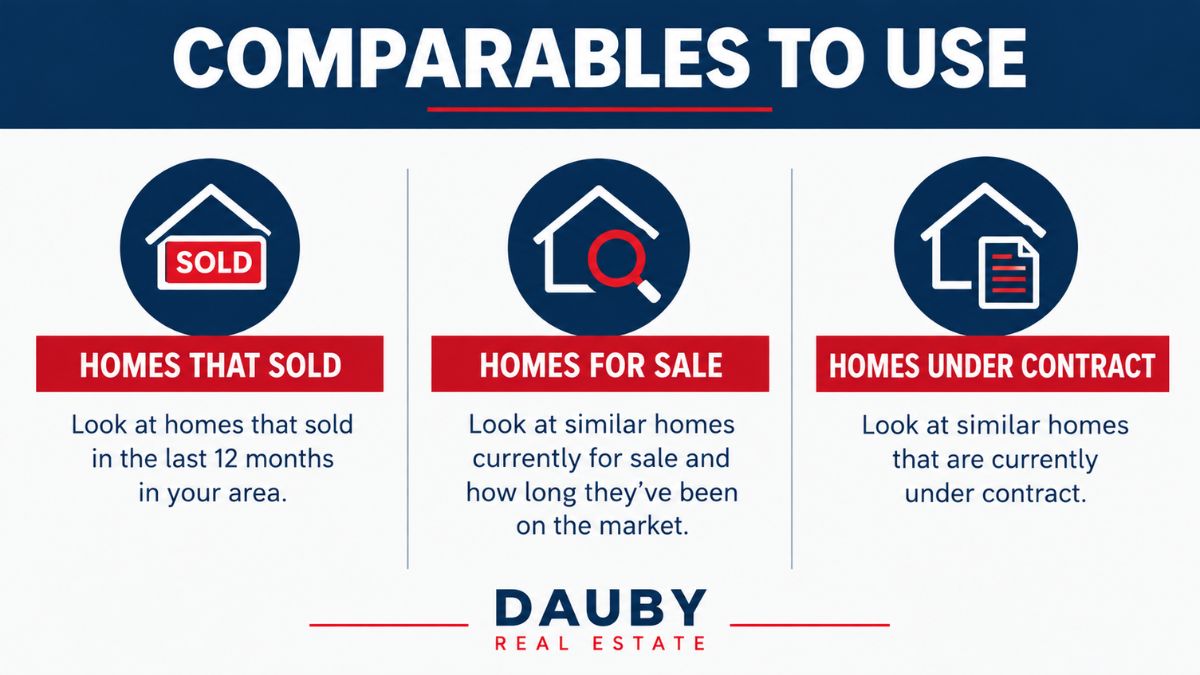
5. Pay Attention to Homes That Are Under Contract
Another helpful part of determining your home's value is looking at properties that are currently pending or under contract.
Why?
Because these homes have attracted an offer that the seller was willing to accept.
Let's say a comparable property was listed for $400,000 and is now under contract.
That tells you there was enough buyer interest for the seller and buyer to reach an agreement.
However, the final sale price may be different from the advertised asking price.
The seller may have accepted $390,000 or negotiated other terms that aren't publicly available while the transaction is pending.
Once the property closes, the actual sale price can provide a more reliable comparable sale.
Looking at active listings, pending properties, and recently sold homes together helps provide a clearer picture of current market conditions.
7. Your Home's Value and Your Listing Strategy Aren't Always the Same Thing
Once you have a realistic estimate of your home's value, the next step is deciding how to price it.
The right listing strategy depends on your goals, timeline, and current market conditions.
For example, someone who needs to sell quickly may approach pricing differently from a homeowner who has more flexibility.
The amount of competition in your neighborhood also matters.
If several similar homes are available, pricing too high could cause your property to sit on the market longer and eventually require price reductions.
On the other hand, a competitively priced home that's well-prepared and properly marketed may attract stronger interest.
That's why it's important to look beyond a single estimated value and consider the full picture.
So, How Much Is Your Home Actually Worth?
If you're wondering what your home could sell for, Zillow and other online estimators can give you a general starting point.
But your home's true market value depends on what buyers are willing to pay for a property like yours in the current market.
That means looking at comparable sales, current listings, pending properties, renovations, location, and buyer demand.
And whether your home is in Evansville, Haubstadt, Princeton, or another Southwest Indiana community, local market conditions can make a significant difference.
If you're considering selling in the next six to twelve months, I'd be happy to put together a market analysis for your property.
We can review what similar homes have sold for, discuss your home's unique features, and develop a pricing strategy that fits your goals.
Thinking about selling? Click here to find out what your home could be worth.
Looking to buy a home in Southern Indiana? Click here to start your home search.
About Trae Dauby
Trae Dauby is the founder of Dauby Real Estate, serving buyers and sellers throughout Evansville and Southwest Indiana. Dauby Real Estate has helped more than 3,500 families with their real estate needs.
Trae creates educational real estate content to help homeowners understand local market conditions and make informed decisions about buying and selling.
Call or text: (812) 777-4611
Website: DaubyRealEstate.com