
Published October 8, 2026
Thinking About Downsizing Your Home? Here’s What You Need to Know Before You Move

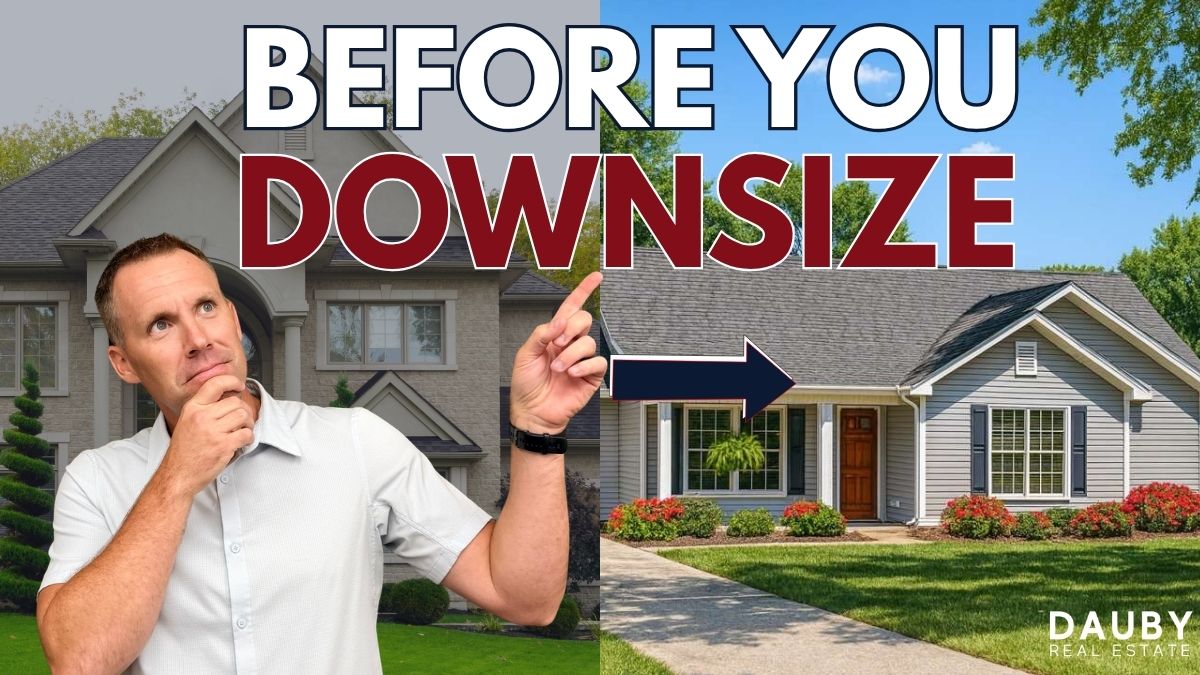
Thinking about downsizing your home in Evansville, Indiana, or the surrounding Southern Indiana area? Selling the family home and moving into something smaller can be a great way to simplify your life, reduce maintenance, and potentially save money.
But before you start counting on how much money you'll have left over, it's important to understand the true cost of downsizing.
From real estate selling expenses and moving costs to the price of buying a smaller home, several factors can affect how much money you actually walk away with.
And for many homeowners, downsizing also means leaving behind a home filled with years of memories.
Whether you're looking for a single-story home, a smaller yard, lower monthly expenses, or a place closer to family, here are seven things to consider before downsizing your home.
Click here to watch the full video.
1. Know Why You Want to Downsize
Before you start looking at smaller homes, ask yourself one important question: What do you want this move to accomplish?
Are you hoping to:
- Have fewer stairs to navigate?
- Spend less time maintaining a large yard?
- Lower your monthly expenses?
- Free up money that's tied up in your current home?
- Move closer to children, grandchildren, or other loved ones?
Each of these goals could lead you toward a different type of home.
For example, if your goal is to spend less time on maintenance, buying a smaller house with a large yard might not solve the problem. And if you're hoping to avoid stairs, you'll want to focus on single-story homes rather than simply looking for fewer square feet.
The goal isn't just to buy a smaller house. It's to find a home that better fits the life you want to live.

2. Give Yourself Time to Prepare Emotionally
For many homeowners, downsizing means leaving a house where they've spent decades raising a family, celebrating holidays, and making memories.
That can make the process of preparing to sell more difficult than expected.
Start slowly by going through rooms you no longer use regularly. Maybe you want space for the grandkids when they visit, but you no longer need two additional bedrooms filled with furniture.
Begin packing items you don't use often, decluttering, and deciding what you want to bring into your next home.
You don't have to erase the memories of your current home to prepare for your next chapter.
Give yourself time to make those decisions at your own pace, especially if you're planning to move within the next six to twelve months.
3. Calculate How Much Money You'll Actually Walk Away With
One of the biggest mistakes homeowners can make when downsizing is assuming they'll receive their home's full selling price.
Your home's sale price and the amount of money you walk away with are two different numbers.
Start by getting an accurate estimate of what your home could sell for. A real estate professional can review comparable properties and current market conditions to help determine a realistic price.
From there, you'll need to subtract expenses such as real estate fees, closing costs, applicable taxes, seller concessions, and any repairs negotiated during the sale.
You'll also need to subtract your remaining mortgage balance.
And don't rely solely on the mortgage balance displayed in your online account. Contact your lender and request an official mortgage payoff amount, since it may differ from your current balance.
Here's an example of how the numbers could work:
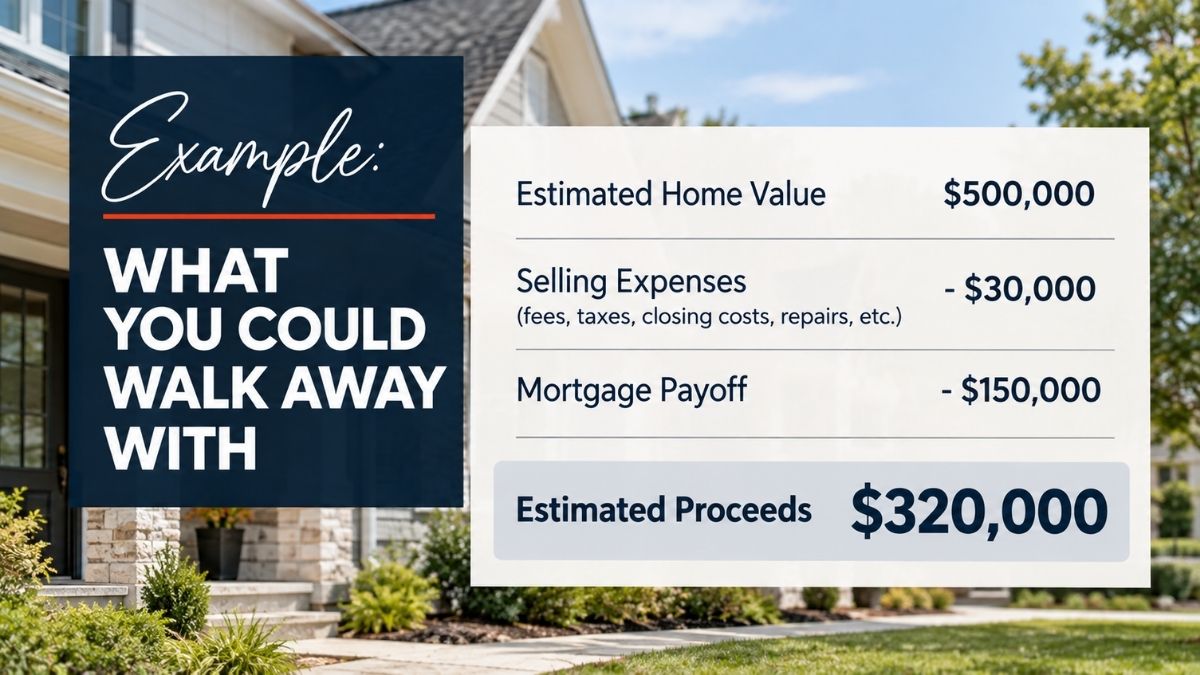
In this example, you would walk away with approximately $320,000 after selling your home.
That gives you a much clearer starting point for determining what you can afford to purchase next.
These figures are for illustration only. Actual proceeds will depend on your home, mortgage payoff, selling costs, and other details of the transaction.
4. Remember That Smaller Doesn't Always Mean Cheaper
It's easy to assume that buying a smaller home automatically means spending less money.
But a smaller home doesn't necessarily come with a smaller price tag.
Location, age, condition, and amenities all influence a property's value.
For example, if you're selling an older home and moving into newer construction in a desirable neighborhood, the smaller property could cost just as much as the larger one.
Smaller homes also often sell for more per square foot than larger properties.
However, if you're moving within the same area and purchasing a home of a similar age and condition, there's often an opportunity to save money.
Let's continue with our earlier example.
Say you sell your home on Evansville's North Side and walk away with $320,000.
You find a smaller, approximately 1,500-square-foot home with a manageable yard for $265,000.
Here's how that might look:
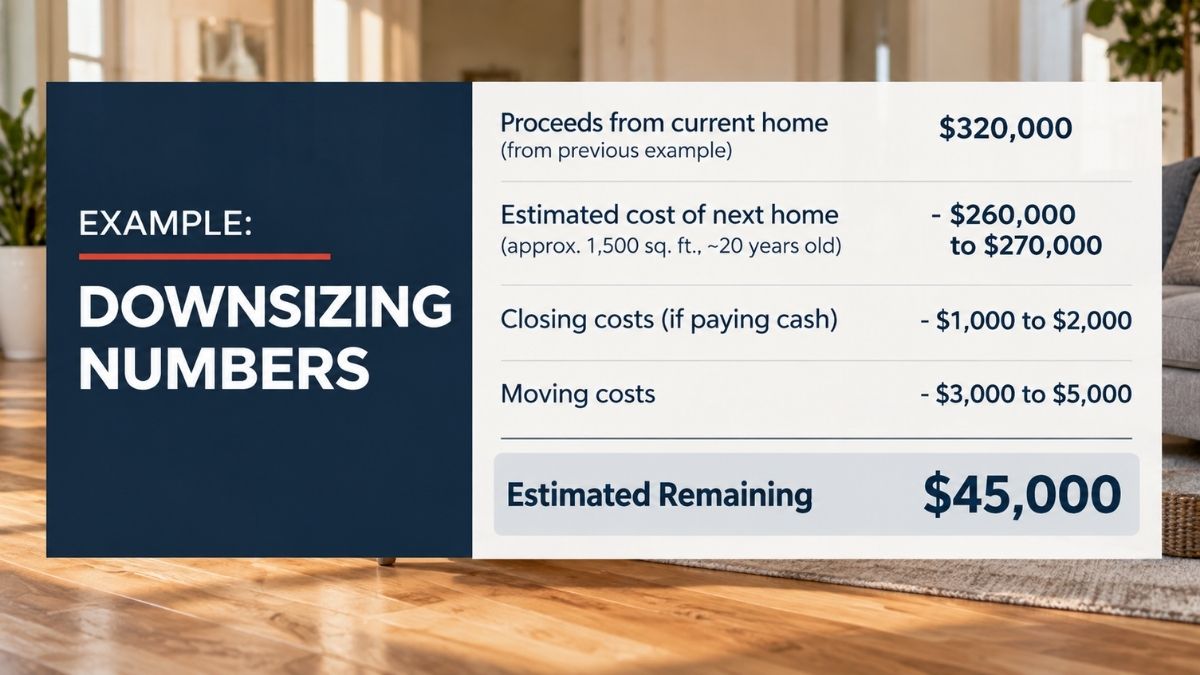
In this example, you could purchase your next home without a mortgage and still have approximately $45,000 remaining.
Keep in mind that these are hypothetical numbers, not a current estimate for a specific property. Home prices and moving expenses vary.
This is why it's important to compare what your current home could sell for with what the type of home you actually want will cost.
5. Consider the Monthly Savings, Too
The money you have left after buying your next home is only part of the financial picture.
A smaller property may also help reduce your ongoing expenses.
Think about what you're currently spending on utilities, property taxes, lawn care, maintenance, and repairs.
If you have a large yard and pay someone to mow it, moving to a smaller lot could reduce that expense. Even if you mow it yourself, you'll likely save time.
A smaller home may also cost less to heat and cool, although that depends on the home's efficiency, condition, and utility systems.
When evaluating whether downsizing makes financial sense, compare both the upfront costs and your expected monthly expenses.
And remember to consider any new expenses, such as homeowners association fees or maintenance requirements, that could come with your next property.
6. Have a Plan for the Money You Save
If downsizing leaves you with extra money, take some time to decide what you want that money to accomplish.
Using our previous example, let's say you have $45,000 remaining after your move.
You might decide to:
- Pay off existing debt.
- Set aside money for future home repairs.
- Build or increase your emergency savings.
- Speak with a financial advisor about investing some of the proceeds.
For example, you might choose to invest $25,000 and keep $20,000 in savings for unexpected expenses or improvements to your new home.
The important thing is to have a plan rather than assuming all the money left over is available to spend.
Even a smaller home can eventually need a new heating and cooling system, appliances, or other repairs.
Having money set aside can give you more flexibility after your move.

7. Decide How You'll Sell Your Current Home and Buy the Next One
Once you understand your home's value, your potential proceeds, and the cost of your next property, it's time to determine how you'll make the move.
There are several ways to approach buying and selling at the same time.
One option is making a contingent offer. This means making an offer on your next home that's dependent on selling your current property.
Another possibility is using a bridge loan or a line of credit to help purchase your next home before your existing property sells, depending on your financial situation and lender approval.
Each approach has different advantages, costs, and risks.
The right strategy depends on factors like how much equity you have, your financial flexibility, and current housing market conditions.
Having a plan before you find your next home can help you avoid unnecessary stress and make the transition smoother.
Downsizing Should Help You Live the Life You Want
Whether you're moving to a smaller home in Evansville, looking for less maintenance in Newburgh, or hoping to be closer to family elsewhere in Southern Indiana, downsizing should ultimately bring you closer to the lifestyle you want.
For some homeowners, that means fewer stairs and less yard work. For others, it means lower expenses, additional savings, or simply being closer to loved ones.
But making the move successfully requires more than comparing the selling price of your current home with the purchase price of a smaller one.
You need to account for selling expenses, moving costs, ongoing maintenance, and how you plan to use any money left over.
If downsizing is something you're considering in the next six to twelve months, you don't have to figure out all those numbers on your own.
I'd be happy to walk through your options, help estimate what your current home could sell for, and show you what a home that better fits your needs might cost.
Thinking About Buying or Selling a Home?
Thinking about selling? Click here to find out what your home could be worth.
Looking to buy a home in Southern Indiana? Click here to start your home search.
About Trae Dauby
Trae Dauby is the founder of Dauby Real Estate, serving buyers and sellers throughout Evansville, Boonville, Haubstadt, Jasper, Newburgh and Southern Indiana. Dauby Real Estate has helped more than 3,500 families with their real estate needs.
Trae creates educational content to help homeowners better understand the financial and practical decisions involved in buying, selling, and downsizing.
Call or text: (812) 777-4611
Website: DaubyRealEstate.com