
Published October 30, 2026
Overpricing Your Home Could Cost You $23,000 in Southwest Indiana

Thinking about listing your home a little higher than its actual value to leave room for negotiation?
It's a common strategy among homeowners, but it could end up costing you more than you think.
In fact, after analyzing more than 4,000 home sales in Southwest Indiana, we found that homes requiring price reductions spent significantly longer on the market and sold for less per square foot than homes that sold without a price drop.
The difference? Approximately $23,000 in our comparison of average sale prices, along with more than two additional months on the market.
If you're thinking about selling your home in Evansville, Newburgh, or anywhere in Southwest Indiana, here's why pricing your home correctly from the beginning matters.
Watch the full video: The Real Cost of Overpricing Your Home
Why Overpricing Your Home Can Backfire
When your home first hits the market, it typically receives some of its strongest attention from potential buyers.
Real estate agents are checking new listings, sending properties to their clients, and watching for homes that match what their buyers are looking for.
At the same time, buyers receive automatic notifications when new properties become available.
And when they see your home, they're immediately comparing it to others they've already toured or researched.
They're looking at square footage, bedrooms, bathrooms, condition, location, and, of course, price.
If your home is priced significantly higher than comparable properties, buyers may decide it's not worth scheduling a showing.
Even buyers who like the home may assume the seller won't be willing to negotiate a substantial reduction during the first week.
That means you could miss an important opportunity to attract interested buyers while your listing is still new.
What Happens When a Home Sits on the Market?
As the days pass, buyers may begin questioning why the property hasn't sold.
A home that's been listed for 30, 60, or even 90 days can attract a different kind of attention than a brand-new listing.
Instead of wondering whether they should act quickly, buyers may start asking:
Why hasn't anyone bought this house? Is something wrong with it? Is the seller asking too much?
That doesn't mean every home that takes longer to sell is overpriced. Some properties naturally have smaller buyer pools or unique features.
But when a home is priced too high, extended time on the market can weaken its negotiating position and lead to price reductions.
What the Southwest Indiana Housing Market Data Shows
Rather than relying on opinions, we looked at actual home sales across Southwest Indiana.
The analysis included more than 4,000 homes sold over the previous year, with sale prices ranging from $100,000 to $1 million.
Here's what we found:
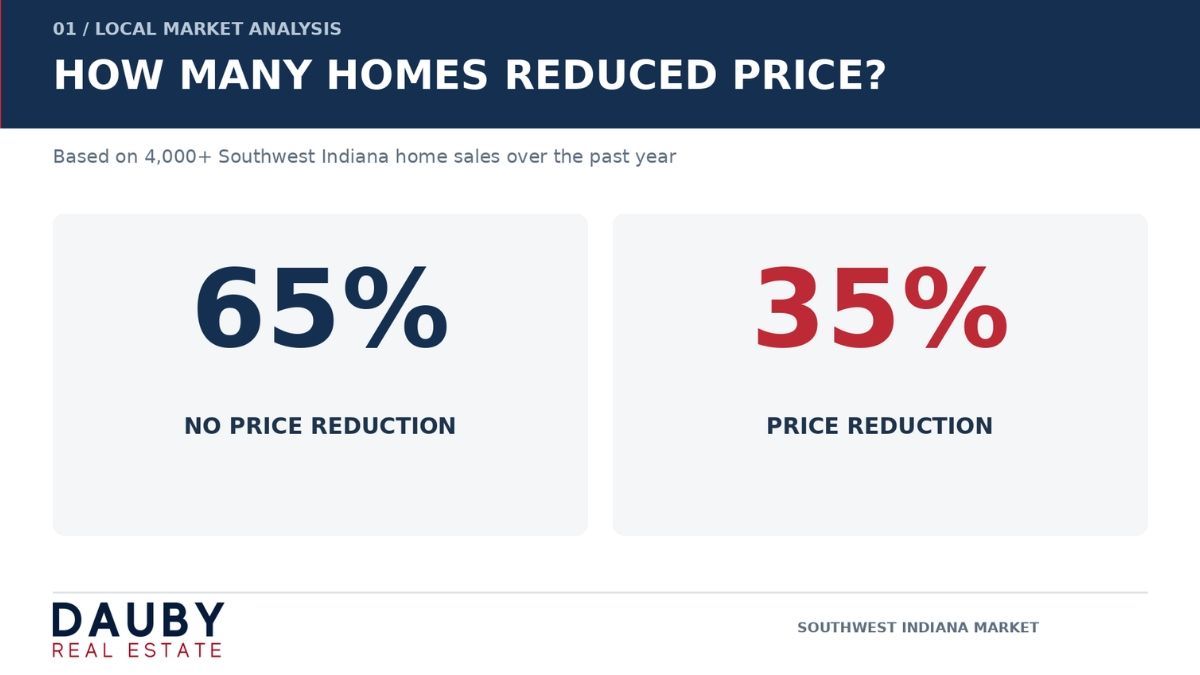
The differences between these two groups were significant.
Homes That Didn't Need Price Reductions
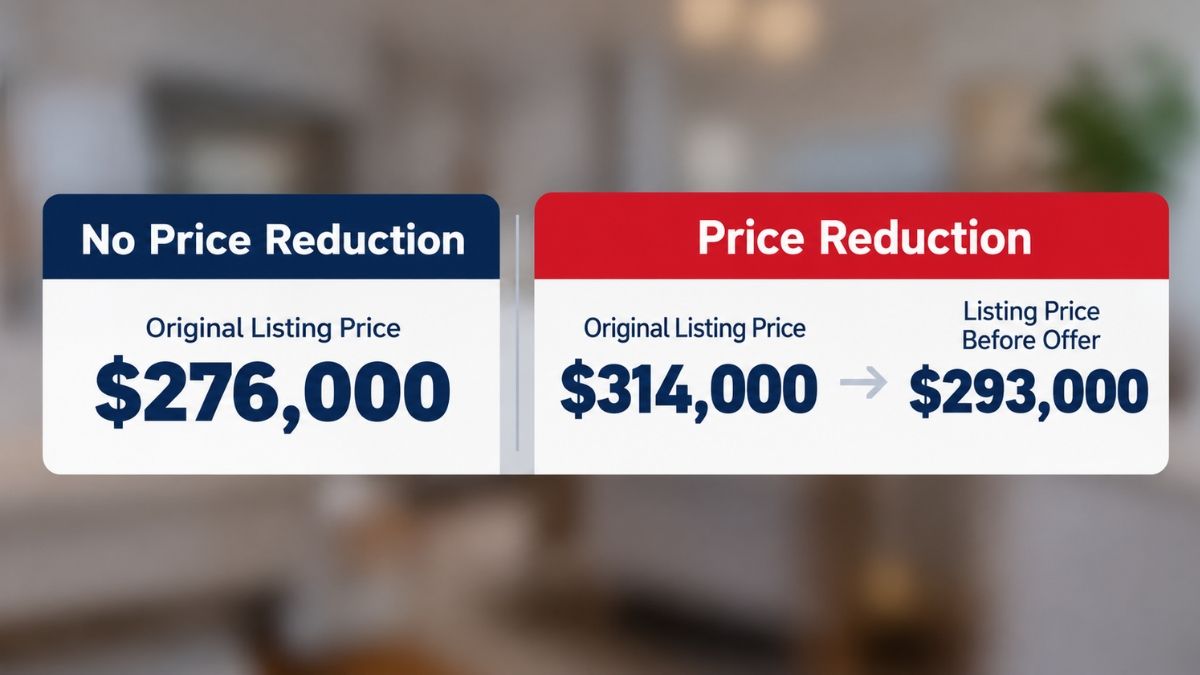
These homes had an average original listing price of approximately $276,000.
On average, they:
- Sold in just 14 days.
- Received 99.3% of their list price.
Homes That Needed Price Reductions
Homes requiring price reductions started with an average asking price of approximately $314,000.
Before receiving an accepted offer, their average asking price had dropped to around $293,000.
On average, they:
- Took 86 days to sell.
- Received approximately 91% of their original asking price.
That's a difference of 72 additional days on the market for homes that required price reductions.
And while these homes initially had higher asking prices, that didn't translate into stronger results.
Did Homes Without Price Reductions Just Start at Lower Prices?
At first glance, you might wonder whether homes that sold without price reductions were simply less expensive properties.
But there's another important factor to consider: square footage.
The average home that sold without a price reduction was approximately 1,871 square feet, compared to 2,059 square feet for homes that required price reductions.
Because the homes were different sizes, comparing their total sale prices alone wouldn't tell the full story.
Looking at the sale price per square foot provides additional context.
Homes without price reductions sold for more than $150 per square foot, while homes requiring reductions averaged around $142 per square foot.
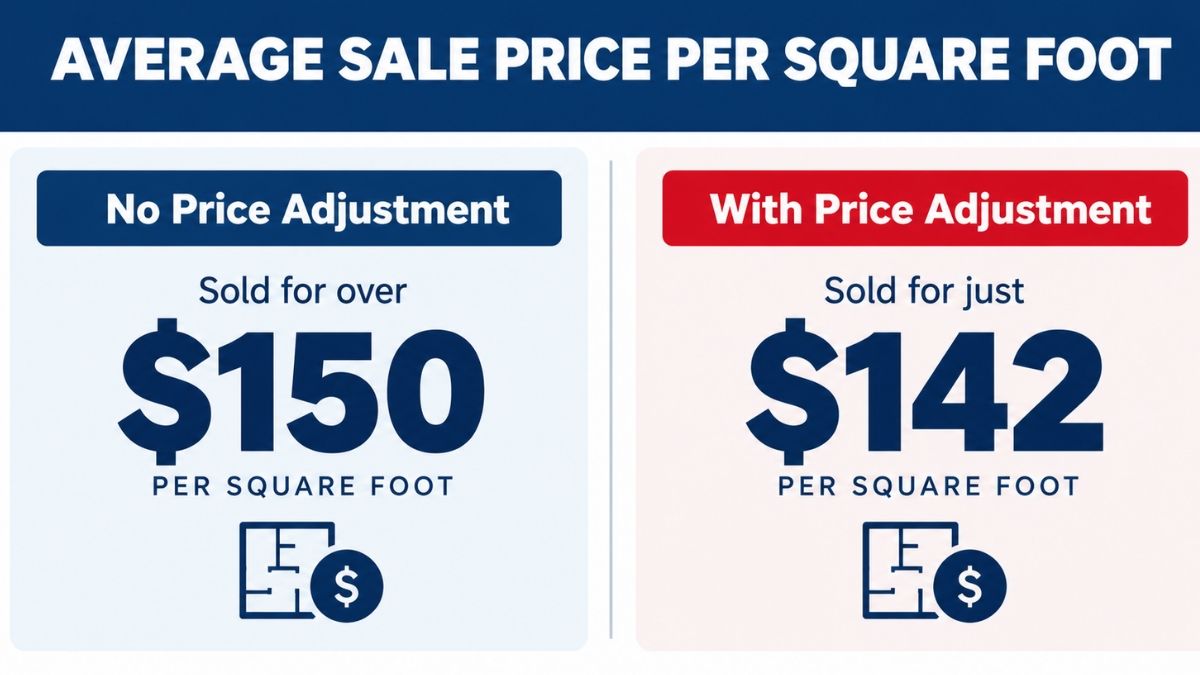
Using the comparison presented in the video, the homes that required price reductions would have sold for approximately $308,000 if they had achieved a similar price per square foot.
Instead, their average sale price was approximately $284,000.
That's a difference of roughly $23,000.
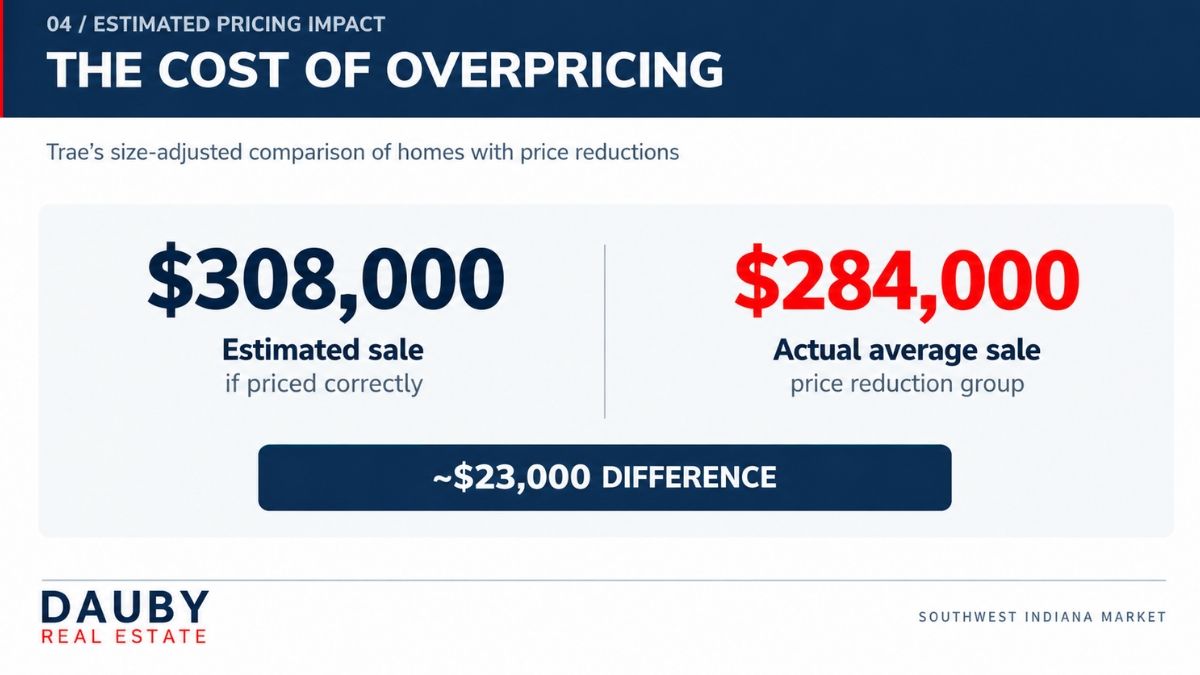
While this comparison doesn't prove that overpricing caused the entire difference, it illustrates how costly an unsuccessful pricing strategy can be.
Starting with a higher asking price doesn't guarantee a higher sale price.
How Much Can Overpricing Cost at Different Price Points?
The impact of price reductions isn't limited to one type of home.
We also looked at how homes performed across different price ranges, from $100,000 to $1 million.
And the differences became especially noticeable in higher price brackets.
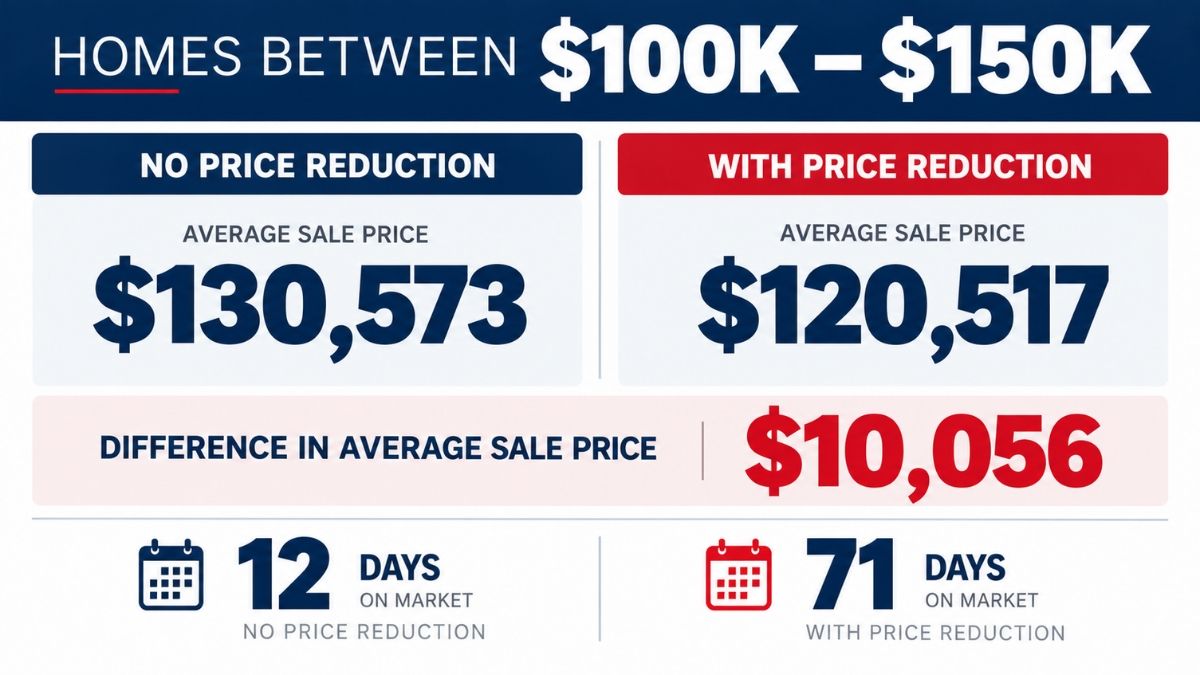
Homes Between $100,000 and $150,000
In this price range, homes that sold without price reductions had an average sale price of $130,573.
Homes that required price reductions averaged $120,517.
That's a difference of more than $10,000.
The time on the market was also significantly different.
Homes without price reductions sold in approximately 12 days, while homes requiring reductions took an average of 71 days.
That's nearly two additional months of waiting.
Homes Between $700,000 and $800,000
At higher price points, the differences were even more substantial.
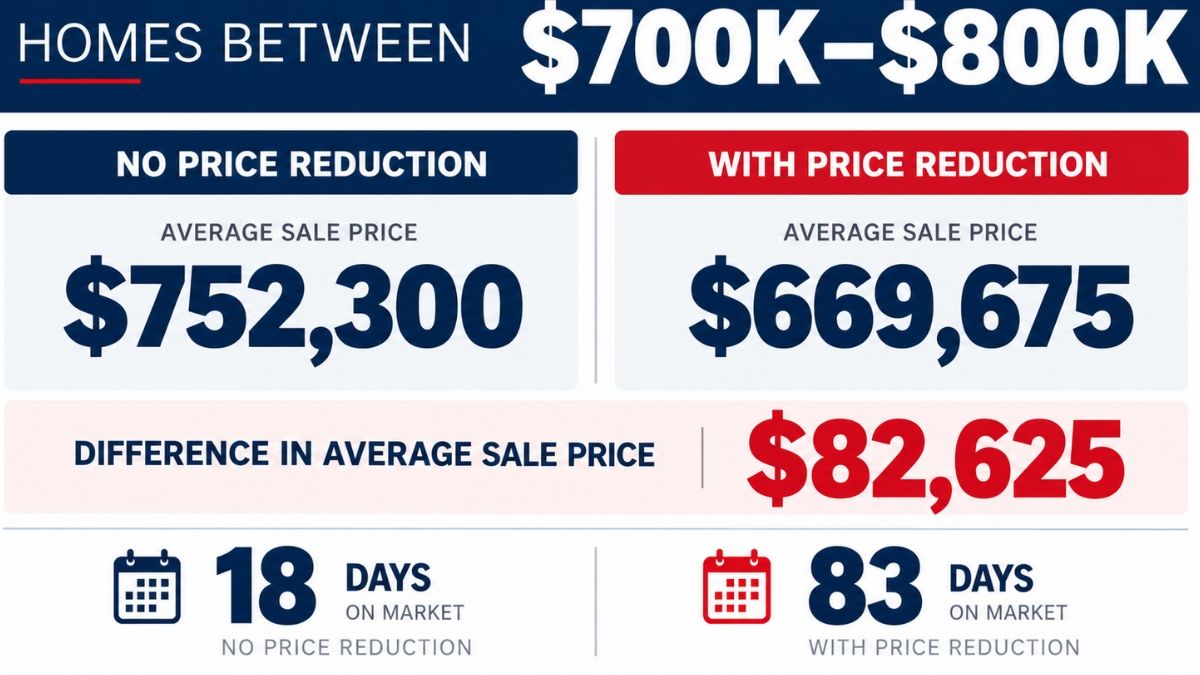
Homes without price reductions sold for an average of $752,300.
Homes requiring price reductions sold for approximately $669,675.
That's a difference of more than $82,000.
And those homes spent approximately 65 additional days on the market.
Of course, the sale-price difference doesn't necessarily represent a dollar-for-dollar loss caused by overpricing. Property condition, location, features, and other factors can also affect the results.
But the pattern is worth paying attention to.
Across the price brackets analyzed, homes requiring price reductions generally spent much longer on the market.
The longer your home takes to sell, the more carrying costs you may also accumulate.
That could include additional mortgage payments, utilities, insurance, maintenance, and property taxes.
Why Not Just Start High and Lower the Price Later?
It's understandable why sellers consider this approach.
You want to get the most money possible for your home, and starting high may seem like a way to protect your negotiating room.
But there's a downside.
You may miss the buyers who would have been most interested in your home when it first entered the market.
By the time you reduce the price, those buyers may have already purchased another property.
And buyers who discover your listing later may notice its extended time on the market or previous price reductions.
That can affect how they approach negotiations.
Instead of making an offer close to your asking price, they may feel more comfortable submitting a lower offer.
This is why pricing correctly from the beginning is often a more effective strategy than relying on price reductions later.
Even If You Get a High Offer, the Deal Still Has to Close
Let's say you list your home above market value and find a buyer willing to pay your asking price.
That's great news, but it doesn't necessarily mean the transaction is guaranteed to close.
There are still important steps to complete.
The Home May Need to Appraise
If the buyer is financing the purchase, their lender will typically require an appraisal.
If the home appraises for less than the agreed-upon purchase price, the buyer and seller may need to renegotiate, the buyer may need additional funds, or the transaction could fall through.
Some government-backed loan programs also have appraisal-related rules that can affect subsequent transactions.
For example, certain FHA appraisal requirements can cause an appraisal to remain associated with a property for a specified period. The exact rules depend on the loan program and circumstances.
Inspection Negotiations Can Create Additional Challenges
A buyer who agrees to pay a premium price may also have high expectations about the home's condition.
If the inspection reveals repairs or maintenance issues, they may request additional concessions.
Those negotiations can affect the seller's final proceeds or create another obstacle before closing.
The goal isn't simply to receive an offer. It's to reach the closing table with terms that make sense for you.
How to Price Your Home Correctly From the Beginning
So how do you determine the right asking price?
Start with a thorough comparative market analysis (CMA).
A CMA looks at recently sold homes that are similar to yours, along with properties currently for sale and those under contract.
A strong analysis should consider:
- Location: Your neighborhood, surrounding area, and local buyer demand.
- Size and layout: Square footage, bedrooms, bathrooms, and floor plan.
- Age and condition: How your home compares to similar properties.
- Updates and features: Renovations, garages, basements, acreage, and other amenities.
- Recent sales: What buyers have actually paid for comparable homes.
- Current competition: What buyers can purchase instead of your home.
It's also important to work with a real estate professional who can explain the reasoning behind the recommended price.
If an agent agrees with your desired asking price without reviewing comparable sales or discussing market conditions, it's worth asking more questions.
A good pricing strategy should be supported by data, not just the number you'd like to receive.
And remember, the best listing price for a home in Evansville may be different from a similar property in Newburgh, Princeton, or another Southwest Indiana community.
Even within the same city, neighborhood demand and property features can make a significant difference.
Thinking About Selling Your Home in Southwest Indiana?
The numbers from our local market analysis highlight an important lesson:
Pricing your home correctly from the start can help you attract buyers, reduce unnecessary time on the market, and put you in a stronger position to negotiate.
That doesn't mean every home requiring a price reduction was initially overpriced, or that every correctly priced home will sell immediately.
But it does show why your initial asking price deserves careful consideration.
If you're thinking about selling your home in the next six to twelve months, I'd be happy to walk through your property and prepare a detailed market analysis.
We'll look at comparable homes, discuss current competition, and develop a pricing strategy designed to help you achieve the best possible outcome.
Thinking about selling? Click here to find out what your home could be worth.
Looking to buy a home in Southern Indiana? Click here to start your home search.
About Trae Dauby
Trae Dauby is the founder of Dauby Real Estate, serving buyers and sellers throughout Evansville, Boonville, Jasper, Rockport, and Southwest Indiana.
Trae shares local market insights and educational real estate content to help homeowners make informed decisions about buying and selling.
Call or text: (812) 777-4611
Website: DaubyRealEstate.com