.png)
Published August 13, 2026
Should You Sell Your House Before Buying Another One?


Should You Sell Your House Before Buying Another One?
If you're thinking about moving, one of the biggest decisions you'll face is whether you should sell your current home first or buy your next home first.
Imagine selling your home only to discover you can't find another house you want to buy. Now you're scrambling to find temporary housing, putting your belongings in storage, or moving in with family.
On the other hand, imagine finding the perfect home and buying it first but your current home doesn't sell as quickly as expected. Now you're responsible for two mortgages, two sets of utilities, and two homes.
Neither scenario sounds particularly appealing.
The good news is that there isn't a one-size-fits-all answer. Depending on your finances, your current home, your timeline, and the local real estate market, there are several ways to successfully buy and sell a home at the same time.
Here's how we help homeowners throughout Evansville, Newburgh, and Southwest Indiana decide which strategy makes the most sense.
Watch the full video explaining the process on how to decide to buy or sell first by clicking here.
Option 1: Sell Your Current Home First
Selling your home before buying another one is generally the more financially conservative approach.
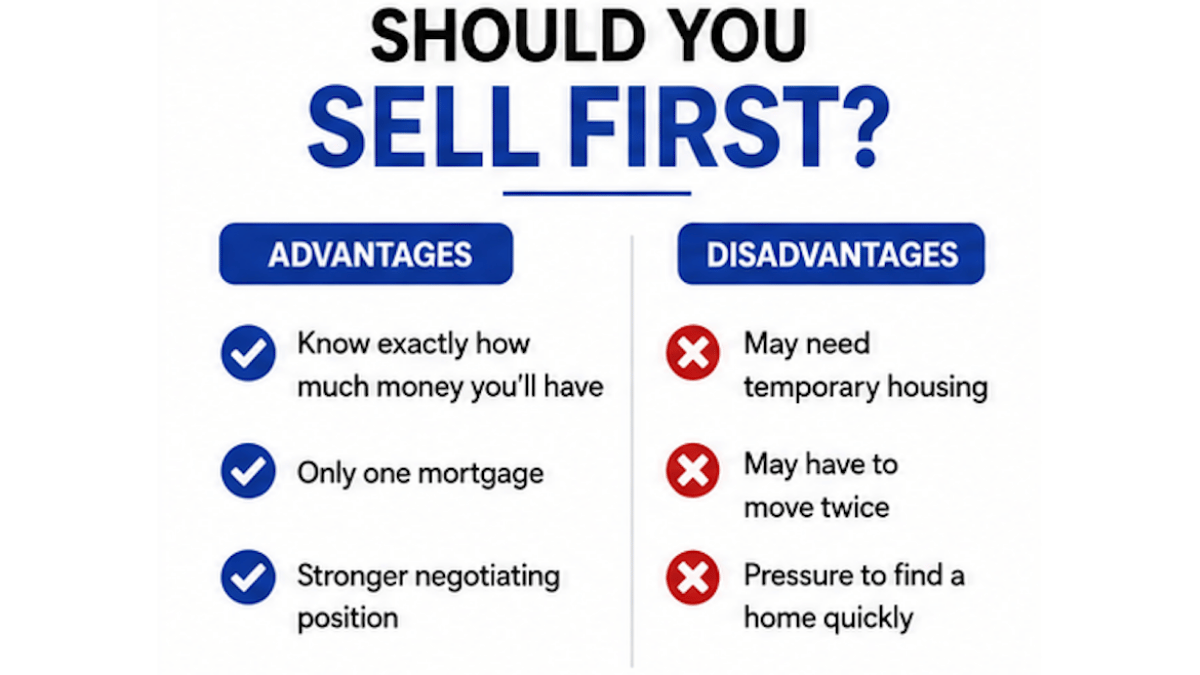
Advantages of Selling First
You know exactly where you stand financially.
Once your home sells, you know how much equity you're walking away with and exactly how much money you have available for your next purchase.
You avoid carrying two mortgages.
Selling first eliminates the possibility of making mortgage payments on two homes while waiting for your current property to sell.
You may have more negotiating power.
If your purchase isn't contingent upon selling another property, your offer may be more attractive to a seller—particularly when you're competing against other buyers.
You can also negotiate with more confidence because you know exactly how much money you received from the sale of your previous home.

Disadvantages of Selling First
The biggest challenge is simple:
Where will you live if you haven't found your next home?
You may need to:
- Find temporary housing.
- Rent a home or apartment.
- Stay with family or friends.
- Put some of your belongings into storage.
- Move twice.
Selling first can also create pressure to find another home quickly. Once your current home is sold, you may feel like the clock is ticking.
For homeowners who value financial certainty and don't mind the possibility of moving twice, however, selling first can be a great option.
Option 2: Buy Your Next Home First
Most homeowners would probably prefer to buy first if they had complete flexibility.
The biggest reason is convenience.
Advantages of Buying First
You only have to move once.
Instead of moving into temporary housing and then moving again, you can move directly from your current home into your new one.
You don't have to settle for the wrong house.
Because you're still living in your current home, you may have more time to wait for the right property rather than feeling pressured to buy because you've already sold.
The physical move can be much easier.
There's no temporary housing, storage unit, or second moving day to coordinate.
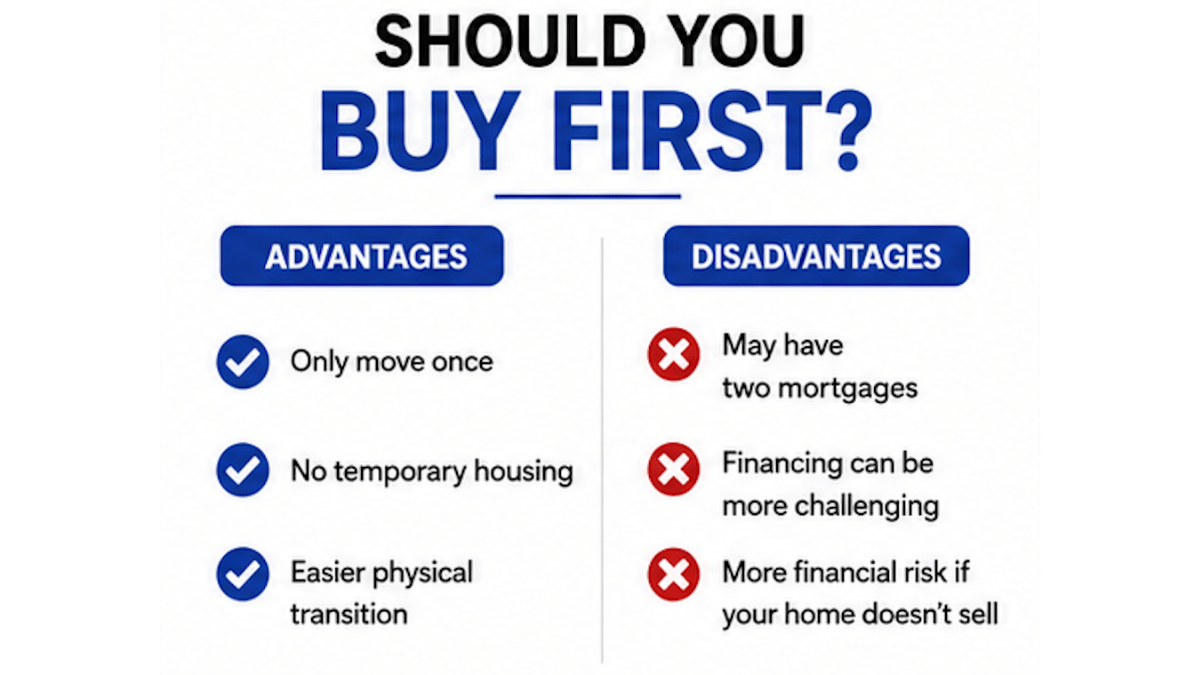
Disadvantages of Buying First
The biggest concern is financial.
Before buying another home, you'll need to determine whether you can qualify for another mortgage while you still own your existing property.
Even if you can qualify, ask yourself another important question:
Are you comfortable carrying two homes if your current house doesn't sell immediately?
That could mean paying:
- Two mortgages.
- Two sets of utilities.
- Insurance on both properties.
- Property taxes on both properties.
- Maintenance expenses on both homes.
There's also the possibility that your current home sells for less than you expected.
If you've already purchased your next home, the financial pressure of carrying two properties could cause you to accept an offer you otherwise wouldn't have accepted.
Four Questions We Ask Before Making a Recommendation
Rather than automatically recommending that someone buy first or sell first, we look at the homeowner's entire situation.
Here are four of the most important questions.
1. Can You Financially Carry Two Homes?
This is usually the first question.
If buying first would leave you financially stretched, selling first may provide considerably more peace of mind.
On the other hand, someone with sufficient income, savings, or equity may be perfectly comfortable owning both properties for a short period.
The important thing is planning for the possibility that your current home takes longer to sell than expected.
2. What's Your Stress Tolerance?
There's financial stress, and then there's moving stress.
Which bothers you more?
Some homeowners would rather carry two mortgages temporarily than move their belongings twice.
Others would happily live in temporary housing for a few months if it means knowing exactly where they stand financially.
Neither answer is wrong.
Understanding what will create the least amount of stress for you should be part of the decision.
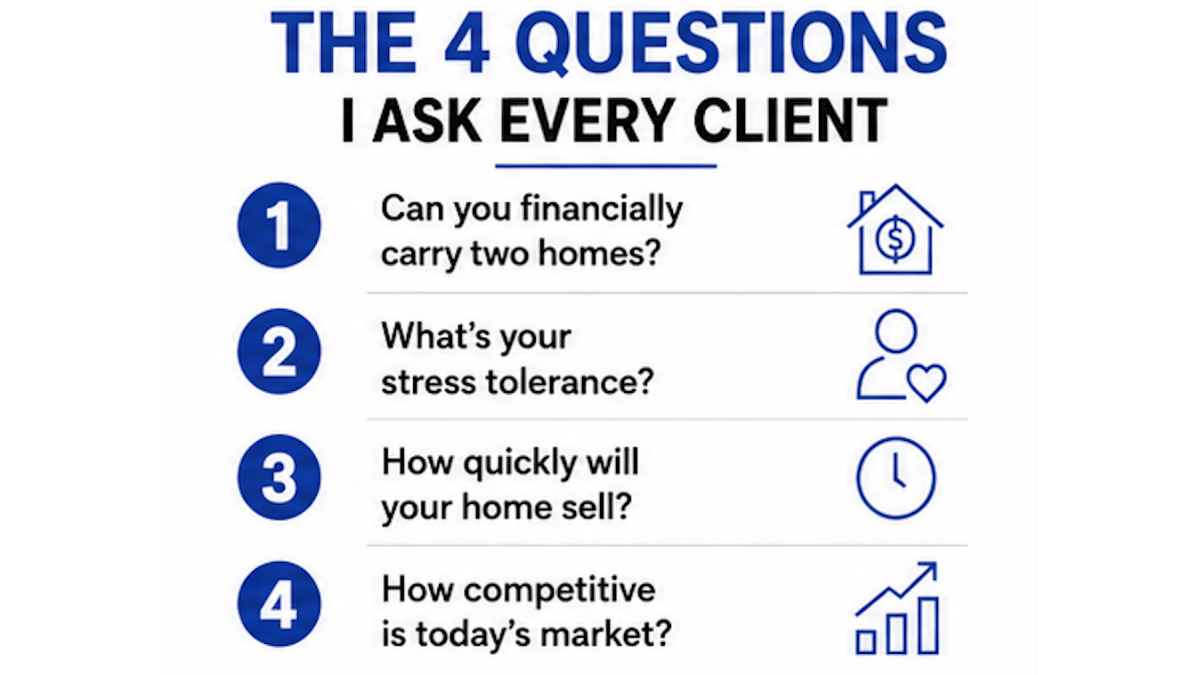
3. How Quickly Is Your Current Home Likely to Sell?
This is where having an experienced local real estate agent evaluate your property becomes important.
Before making a recommendation, we look at things like:
- Your home's condition.
- Recent comparable sales.
- Current competition.
- Average days on market.
- Your neighborhood.
- Your price range.
- Current buyer demand.
- The appropriate pricing and marketing strategy.
There are situations where we can look at a property and have a high degree of confidence that it should sell relatively quickly if it's priced and marketed correctly.
Other properties are more unique and may require additional time to find the right buyer.
That difference can dramatically change the strategy we recommend.
4. How Competitive Is the Current Market?
Real estate isn't one market.
What's happening with a $200,000 home in Evansville can be very different from what's happening with a $600,000 home in Newburgh.
That's why we look beyond general Southwest Indiana housing statistics and evaluate what's happening specifically within the market for your type of property.
If demand for homes like yours is strong and inventory is limited, buying first may involve less risk.
If homes like yours are taking longer to sell, we may recommend a more conservative approach.
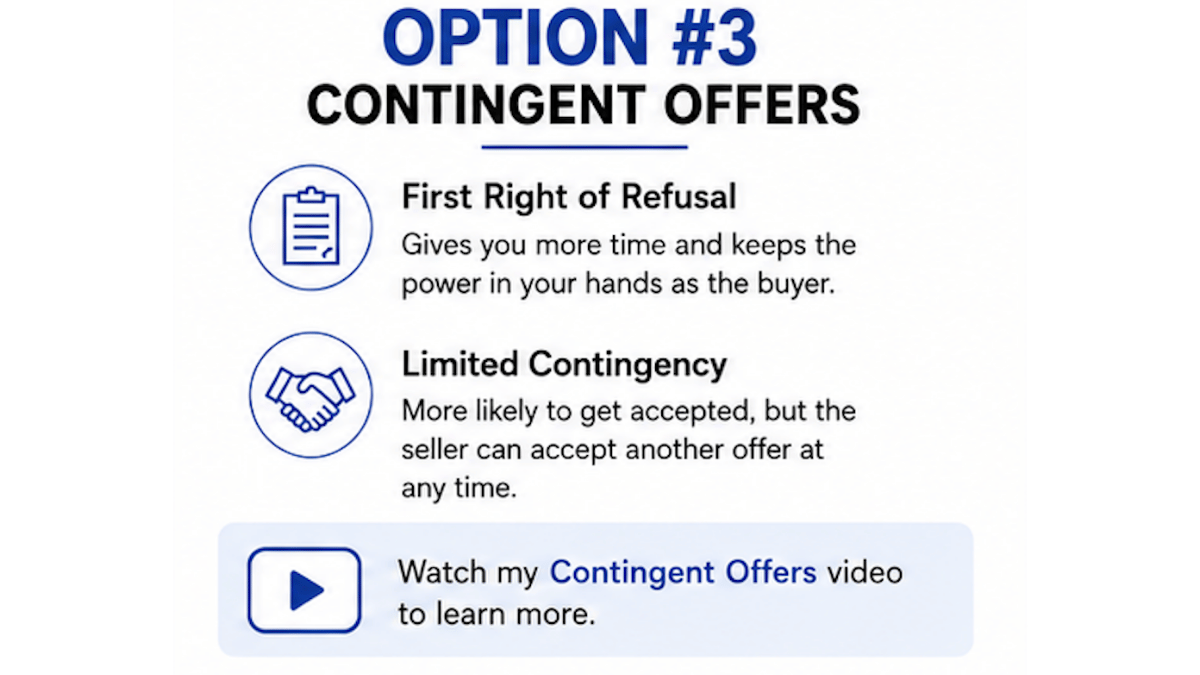
Option 3: Buy With a Contingent Offer
There's actually another option between simply "buy first" and "sell first."
You may be able to make the purchase of your next home contingent upon selling your current home.
Depending on the situation, this could involve a First Right of Refusal contingency or a Limited Contingency.
These strategies may allow you to secure your next home while simultaneously putting your current property on the market.
Whether a seller will accept a contingent offer depends heavily on the property, how long it's been listed, competing offers, and current market conditions.
We've created a separate guide explaining how contingent offers work when buying and selling at the same time. If this sounds like the strategy that may work for you, that's a great resource to read next.
Prepare Your Home Before You Find Your Next One
One strategy we frequently recommend is getting your current home completely prepared before you find the home you want to buy.
That doesn't necessarily mean putting it on the market immediately.
Instead, we can:
- Walk through your property.
- Recommend repairs or improvements.
- Determine an appropriate pricing strategy.
- Prepare the marketing.
- Complete professional photography.
- Get the necessary paperwork ready.
Then you can begin looking for your next home.
If you find the right property and get an offer accepted, we're ready to move quickly.
Instead of spending another week preparing your house for the market, we can essentially flip the switch and launch your listing.
When you're dealing with a contingency or coordinating two transactions, those extra days can make a significant difference.
So, Should You Sell First or Buy First?
Here's the bottom line:
Sell first if financial certainty is your biggest priority and you're comfortable with the possibility of temporary housing or moving twice.
Buy first if you're financially comfortable carrying two homes temporarily and avoiding a second move is particularly important to you.
Consider a contingent offer if you need the proceeds from your current home to purchase your next one but want to find your next home before selling.
But there isn't one strategy that's right for every homeowner.
The best approach is to create the plan before you start buying or selling.
Find out what your home is worth here.
Frequently Asked Questions
Can I buy another house before selling my current one?
Yes. Depending on your financial situation, you may qualify to purchase another home while still owning your current property. You may also have access to financing strategies or contingent offers that can help you coordinate the two transactions.
Is it better to sell your house before buying another one?
It depends. Selling first generally provides greater financial certainty because you know exactly how much equity you'll receive and avoid carrying two mortgages. Buying first, however, can make the physical move significantly easier and eliminate the need for temporary housing.
What happens if I buy a new house and my old house doesn't sell?
You'll generally remain responsible for the mortgage, insurance, utilities, taxes, and maintenance on both properties until your previous home sells. That's why it's important to evaluate your financial ability to carry both homes before buying first.
Can I make an offer on a house before selling mine?
Yes. You may be able to submit an offer that's contingent upon the sale of your existing home. Whether the seller accepts it will depend on the specific property, market conditions, competing offers, and the terms of your contingency.
How can I avoid moving twice when buying and selling a home?
Buying your next home before selling, coordinating closing and possession dates, negotiating post-closing possession, or using a contingent offer may help you avoid moving twice. The best strategy depends on your individual situation.
How do I know how quickly my home will sell?
An experienced local real estate agent can evaluate recent comparable sales, current competition, buyer demand, average days on market, your home's condition, and your price range to estimate how your property is likely to perform.
Thinking About Buying and Selling in Southwest Indiana?
If you're considering moving up into a larger home, downsizing into something smaller, or simply moving into a home that better fits your life, you don't have to figure out the timing on your own.
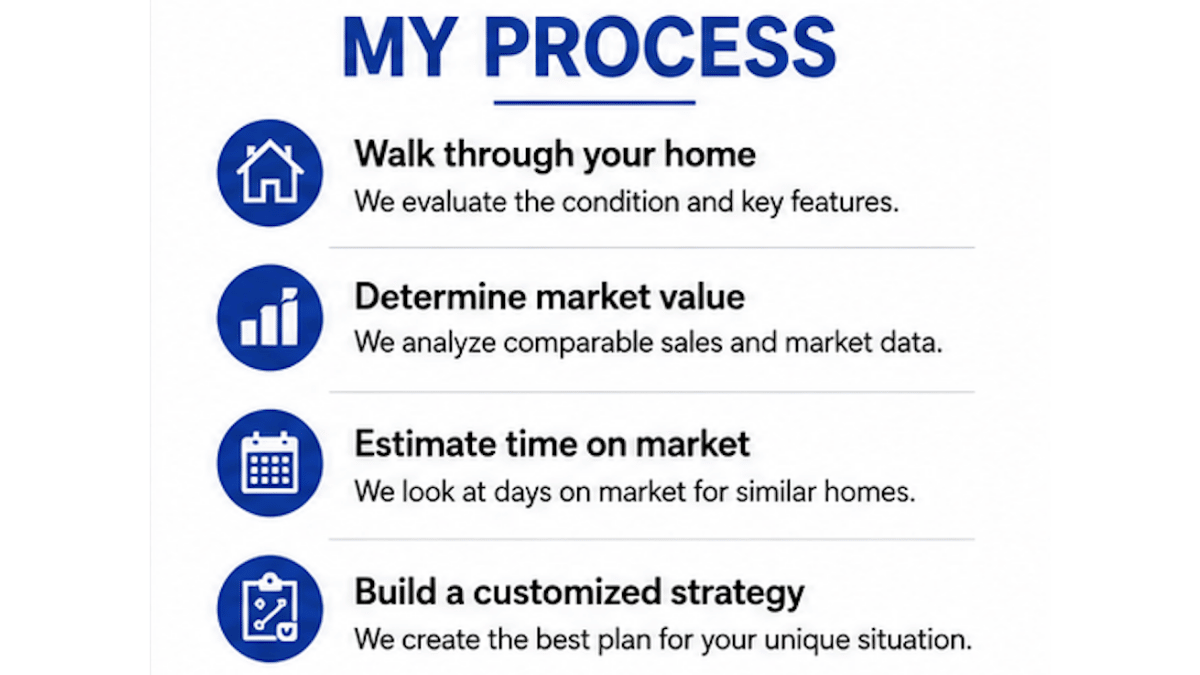
At Dauby Real Estate, we'll start with a complimentary walkthrough of your current home.
We'll evaluate its condition, estimate its current market value, look at how quickly similar homes are selling, and help you create a strategy for buying and selling that fits your particular situation.
There's no obligation to list your home or work with us on your next purchase. The goal is simply to give you the information you need to make a smart decision.
Call or text: 812-777-4611
DaubyRealEstate.com
About Trae Dauby
Trae Dauby is the founder of Dauby Real Estate and has been helping buyers and sellers throughout Southwest Indiana for more than a decade. Under his leadership, Dauby Real Estate has helped more than 3,500 families buy and sell homes and has earned more than 800 five-star Google reviews.
Trae and the Dauby Real Estate team serve homeowners throughout Evansville, Newburgh, Warrick County, Vanderburgh County, and communities across Southwest Indiana. He regularly shares local housing market updates, real estate education, and practical advice designed to help homeowners make confident decisions about buying, selling, and investing in real estate.
Have a real estate question? Call or text Trae at 812-777-4611 or learn more at DaubyRealEstate.com.